How to Correctly Charge a Car Battery
Knowing how to charge a car battery is essential not only for extending the battery's service life but also for the safety of the vehicle's electrical system. The correct algorithm depends on the battery type (Calcium, Gel, AGM, Antimony), its capacity, and the depth of discharge.
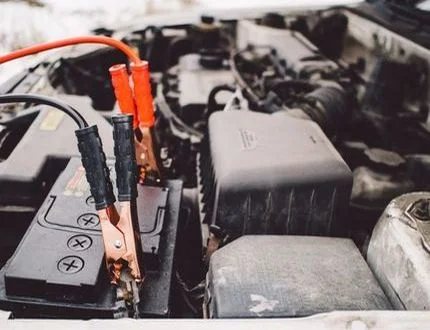
How to properly charge a car battery
There are two main methods for charging batteries: constant current and constant voltage. Let's look at the features of each method.
Constant Current Charging
On an adjustable charger, set the amperage to 10% of the battery's capacity. For example, a 60 Ah battery is charged with a current of 6 Amps. The voltage will change during the process.
Disadvantage of this method: the process requires constant monitoring. In serviceable batteries, gas is released during charging, and the closer to full charge, the more intense the 'gassing' or boiling. This is a normal sign for classic batteries.
Step-by-step charging algorithm:
- Set current to 10% of capacity. Charge until voltage reaches 14.4 V.
- Reduce current by half (to 5% of capacity, e.g., 3 A). Continue until voltage reaches 15 V.
- Reduce current by half again (to 2.5% of capacity). Charge until voltage and current remain unchanged for 1–2 hours.
Constant Voltage Charging
In this method, the voltage is fixed on the charger. At the start of the process, the current will be maximum (depending on how discharged the battery is), and by the end, it will drop almost to zero. This is a safer and simpler method for most modern devices.
The state of charge depends on the applied voltage:
- 14.4 V — restores charge to 75–85%.
- 15 V — restores to 85–90%.
- 16–16.4 V — necessary for a 100% charge of standard flooded batteries (requires monitoring to ensure the electrolyte does not boil away).
How to charge a car battery (general rules)
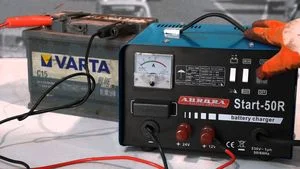
Regardless of the battery type, it is best to use specialised chargers. For most tasks, the automatic mode is sufficient.
For classic lead-acid ('antimony' and hybrid) batteries, the optimal current is 10% of capacity and voltage is between 13.8 and 14.5 Volts. The charging duration depends on:
- battery capacity;
- degree of discharge;
- actual amperage used.
Gentle mode: setting the current to 2–3 Amps overnight (10–12 hours). This reduces the risk of overheating and overcharging.
Before charging, it is recommended to clean the terminals of any oxidation. After charging, they can be treated with special grease.
When to charge the battery
Signs that charging is needed:
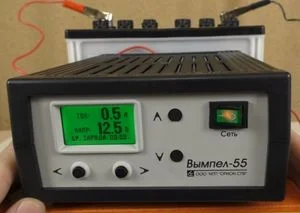
- Voltage at the terminals (6–8 hours after stopping the engine):
- 12.6–12.7 V — 100% charged.
- 12.2–12.3 V — about 50% charged.
- Below 11.7 V — deep discharge, urgent charging required.
- Electrolyte density (for serviceable batteries): Normal — 1.27 g/cm³. If lower, charging is needed.
- Difficult starting: The starter motor turns sluggishly, dashboard lights dim.
Can you charge the battery on the car?
You can charge the battery without removing it from the car, but safety rules must be strictly followed.
Do you need to remove the terminals? Ideally, yes. If you are using an old or makeshift charger, a voltage spike could damage the vehicle's electronics (ECU, multimedia). If a high-quality automatic charger is used, many people charge without disconnecting the terminals, but the risk remains with the owner. It is recommended to disconnect the negative terminal in any case.
How to charge a Calcium battery
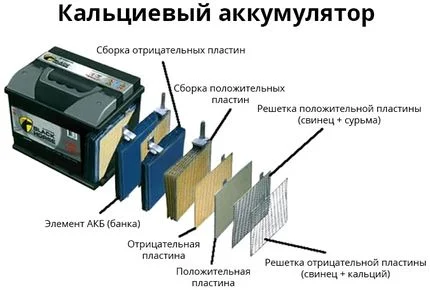
Calcium batteries (Ca/Ca) are characterised by low self-discharge and low water consumption but are sensitive to deep discharges.
There are two approaches to charging them:
- Standard (safe): Charging with a voltage of 14.4–14.8 V. This will restore the charge to 90–95%, which is sufficient for operation.
- Full (to restore density): Manufacturers often indicate the need for 16.0–16.5 V for a 100% charge. However, this mode requires a special charger (e.g., with programmable algorithms) and strict control.
'Pulse' algorithm (for advanced users with a suitable charger):
- Charge with a current of 10% of capacity up to a voltage of 14.4–14.8 V.
- Top up with short pulses: voltage rises to 16.1–16.3 V, then the current cuts off and voltage drops to ~13.2 V. The cycle repeats.
- This mode prevents violent boiling, allowing the electrolyte to mix.
How to charge a Gel battery
Gel batteries (GEL) are very sensitive to voltage levels. The electrolyte inside is in a jelly-like state.
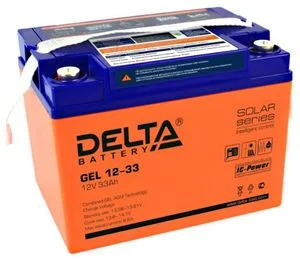
Main rules:
- Voltage: It is critical not to exceed the threshold of 14.4–14.5 V (check the casing more precisely — parameter Cycle use). Exceeding this (e.g., up to 15 V) will cause the gel to detach from the plates and lead to irreversible capacity loss.
- Current: Standard is 10% of capacity. Up to 30% is permissible for fast charging, but this shortens the service life.
- Storage mode (Standby Use): To maintain charge, a voltage of 13.5–13.8 V is used.
For GEL batteries, it is strongly recommended to use automatic chargers with a specific profile ('GEL' mode).
How to charge a Hybrid battery
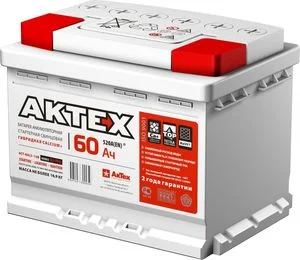
Hybrid batteries (Ca+ or Sb/Ca) combine the technologies of low-antimony and calcium batteries. They are more resistant to deep discharges than pure calcium and require less maintenance than classic ones.
They are charged in the standard way: current at 10% of capacity, voltage 14.2–14.4 V (up to 14.8 V is acceptable at the end of the charge). A sign that charging is complete is a drop in current to 0.3–0.5 A and voltage stabilisation.
How to charge an AGM battery
AGM (Absorbent Glass Mat) is not the same as gel. In these, the electrolyte saturates the fibreglass mat between the plates. They accept charge very well and are resistant to vibration.
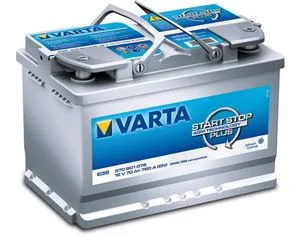
Charging modes:
- Main charge: Voltage 14.4–14.8 V (not higher than 14.8 V!). Current — 10–20% of capacity.
- Storage (buffer mode): Voltage 13.2–13.8 V.
AGM batteries are sensitive to excess voltage. Using simple chargers that can output more than 15 Volts is unacceptable — the battery will swell and fail due to the pressure relief valves activating.
How to charge a maintenance-free battery
Since maintenance-free batteries provide no access to the cells for topping up water or measuring density, you must rely on the charger and voltmeter readings.
The optimal choice is an automatic charger. If using a manual one, do not allow vigorous boiling. As soon as the voltage reaches 14.4 V and the current drops to a minimum, charging should be stopped. Prolonged overcharging of a maintenance-free battery will lead to water loss through the emergency valve, which cannot be replenished, effectively killing the battery.
Was this article useful?
Your feedback helps us improve our content.
Related Materials



Discussion (0)
No comments yet!