P0087: Low Fuel System Pressure Error

Error P0087, indicating that fuel rail pressure is too low, may eventually trouble the owner of a diesel vehicle or a car with direct injection. Nothing lasts forever, and during operation, wear occurs not only in the engine but also in the fuel equipment. The P0087 code is logged in the ECU memory when the actual pressure in the fuel rail falls significantly below the target (calculated) value for a certain period (usually 2–3 seconds). Excessively low system pressure can lead to various vehicle behaviours, depending on the specific cause of the fault.
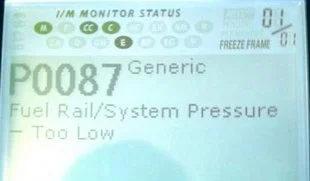
Error P0087: indicates that system fuel pressure has dropped below the permissible level (System Pressure Too Low).
Car behaviour with low rail pressure
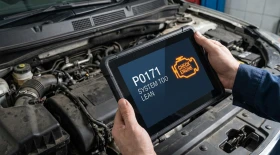
In some cases, the engine speed fluctuates upon starting, potentially leading to the engine stalling. The Check Engine light, signalling error P0087, often illuminates when attempting to accelerate sharply. Sometimes the vehicle enters 'limp mode', and revs do not rise above 3000. The diagnostic scanner provides the definition: Fuel Rail/System Pressure — Too Low. Under high loads, when fuel consumption increases, a 'system too lean' error (P0171) may occur simultaneously.
Where to look for the fault?
This is a complex question, as there can be many causes, and each must be ruled out through diagnostics.
Items to be checked:
- Low-pressure line (from tank to HPFP);
- Fuel filter and tank strainer;
- HPFP (High-Pressure Fuel Pump);
- Pressure regulator valve (PCV/DRV);
- Fuel injectors (check for leak-off/return flow);
- Fuel Rail Pressure Sensor (RPS);
- Wiring and sensor connectors.
Diagnostics should begin with the low-pressure circuit (in-tank pump, filter). Often, unstable system operation is caused by a clogged filter, poor contact in the fuel pump assembly connector, or low performance of the lift pump.
Main causes of error P0087
- Clogged fuel filter or pick-up strainer;
- Failure of the fuel pressure sensor (providing incorrect data);
- Faulty or seized fuel pressure control valve;
- Wear of the HPFP cam follower (relevant for VAG group);
- Injector leaks (pouring into the return line, pump cannot build sufficient pressure);
- Wear of the HPFP plunger pairs.
Before replacing expensive components, ensure the fuel filter is clean and electrical contacts on sensors are secure.
More serious problems with the HPFP or control unit require professional equipment (a test bench) for accurate troubleshooting. It is impossible to repair precision HPFP pairs yourself without experience and specific tools.
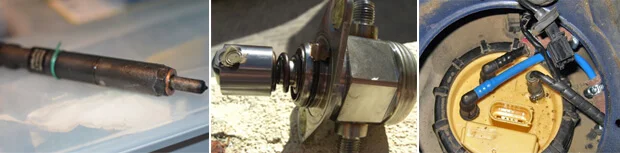
When searching for the cause of pressure loss, consider the specific features of the vehicle make. In some cars, the weak point is the wiring of the in-tank pump; in others, it is the HPFP cam follower; while in others, it is injectors leaking fuel back into the return line, preventing rail pressure from rising to the required level.
Was this article useful?
Your feedback helps us improve our content.
Related Materials
Discussion (0)
No comments yet!