P0135: Oxygen sensor heater circuit malfunction. Why did error P0135 B1S1 appear?

P0135 indicates a malfunction in the oxygen sensor heater circuit (Bank 1, Sensor 1). This code tells the driver that there are failures in the heating mechanism of the first lambda probe (installed before the catalytic converter). Error P0135 is identified using a diagnostic scanner or self-diagnosis. Often, there are no symptoms other than the lit "Check Engine" light, as the heater fault mainly manifests during the engine warm-up phase.
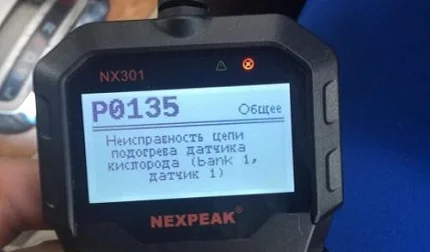
How error P0135 affects vehicle behaviour
The car's behaviour might not change if the engine is already warm. The main sign is the "CHECK ENGINE" indicator.
However, unlike problems with the second sensor (B1S2), a fault in the first probe (B1S1) directly affects the fuel mixture formation. Fuel consumption may increase during the warm-up phase: since the heater isn't working, the sensor takes a long time to reach operating temperature, and the ECU injects a rich mixture for longer (operating in "Open Loop" mode). A slight loss of dynamics when cold and a more pungent exhaust smell are possible.
Error P0135 is recorded by the ECU when the heater circuit resistance falls outside the permissible range or the current consumption is too low/high. The code is stored in the memory and requires resetting after the cause is eliminated.
Causes of error P0135
There are not many faults associated with the oxygen sensor heater, and they can be determined with a multimeter:
- Burnout of the heating filament inside the sensor (the most frequent cause);
- Poor contact in the power connector (oxidation, open circuit);
- Wiring break or short circuit in the heater circuit;
- Issues with the heater circuit fuse (on some cars).
To eliminate the cause, you need to check the lambda probe circuit step by step.
Fixing the heater circuit error
First, ensure the wiring is intact and clean the connector contacts. After that, check the resistance of the heating element.
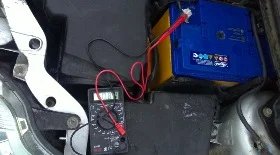
For a correct measurement, disconnect the sensor plug. Measurements are best taken on a cold sensor (at room temperature, approx. +20°C). Connect the multimeter probes to the two wires of the same colour (usually two whites or two blacks — these carry the 12V supply to the heater).
If the resistance is normal, check if power (12 volts) reaches the corresponding part of the socket when the ignition is switched on. If there is no power, look for a break in the wiring or a blown fuse.
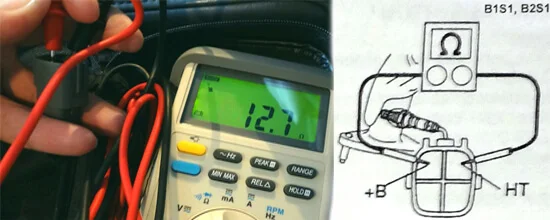
Checking the resistance of the first oxygen sensor (B1S1)
After replacing the sensor or repairing the wiring, it is advisable to reset error P0135 with a scanner (or by removing the battery terminal for 10-15 minutes) so that the ECU starts polling the system again. To monitor performance, use any diagnostic scanner (ELM327 and similar): on the B1S1 graph, the sine wave should appear faster than before the repair.
Was this article useful?
Your feedback helps us improve our content.
Related Materials


Discussion (0)
No comments yet!