Black Smoke from the Exhaust
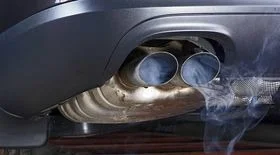
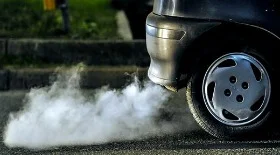
Black smoke from the exhaust pipe can occur in all engine types—those running on diesel, petrol, or LPG (liquefied petroleum gas). If black smoke is billowing from the exhaust, it means there is an ignition problem or an over-rich fuel-air mixture has formed. Therefore, black exhaust is primarily an indicator of high toxicity in the gases, increased fuel consumption, and a fault within the fuel system.
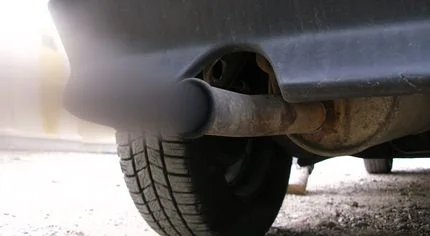
Usually, the problem manifests as black smoke pouring out of the tailpipe when the accelerator pedal is pressed (especially on a cold start and/or during sudden acceleration). At the same time, the engine often runs unstably, misfires, and is difficult to start, especially after being parked for a long time (for example, in the morning). It is necessary to distinguish between "black smoke" and "blue smoke", as these two signs indicate different engine failures.
Causes of Black Smoke from the Exhaust
Interestingly, regardless of the engine type affected, the general cause in most cases is the same: an overly rich fuel-air mixture is being supplied to the combustion chamber (too much fuel, too little air). However, the reason why this happens depends on the specific type of motor, as a properly functioning petrol engine emits black smoke much less frequently than a diesel one.
As for the ignition system, two scenarios are most common: problems with the spark plugs or the coil(s). If the spark plugs do not provide a spark of sufficient power, the fuel-air mixture does not burn completely. One result of this is black soot deposits on the electrodes. Sometimes the plugs get flooded with fuel entirely, making it difficult to start the engine. Diesel engines use glow plugs, and if they are faulty, they cause increased smoke during a cold start, as the fuel in a cold cylinder does not burn completely.
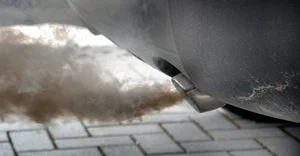
In a petrol engine, incomplete combustion can be caused by the coil. If it is damaged, misfires in individual cylinders may occur.
In the fuel system, problems in this context may be related to the fuel pump and/or fuel injectors. If they fail partially, fuel overflow beyond the norm is possible, resulting in the formation of a rich mixture.
It is worth dwelling separately on poor quality fuel. Unfortunately, many car owners encounter low-quality fuel at filling stations. This applies to all types—petrol, diesel, and LPG. If there is a significant amount of non-combustible impurities in their composition, normal engine operation will be disrupted, which can lead, among other things, to the appearance of black smoke from the exhaust.
Black Smoke from a Carburettor Exhaust
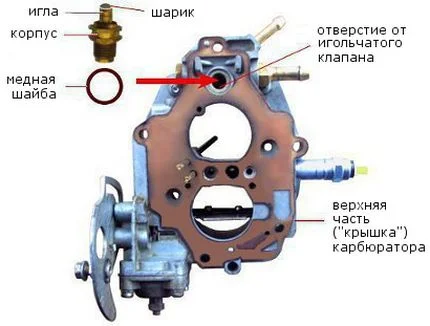
If a carburettor engine emits black smoke from the exhaust pipe, the first thing to check is the carburettor itself. Most often, so-called "flooding" occurs, meaning the amount of petrol entering exceeds the norm. This, in turn, can happen for two reasons.
The first is a faulty needle valve. It simply gets stuck in the open position, allowing excess fuel to pass through. The second reason is clogged air jets (or incorrect operation of the choke). If insufficient air enters, an over-rich mixture is created in the carburettor.
Often, simply cleaning the carburettor with a carb cleaner is enough to solve the problem. If simple cleaning does not help, you need to purchase a repair kit, which usually includes a new valve and jets, and replace them. Finally, the carburettor needs to be tuned correctly, and the petrol level in the float chamber must be set.
Black Smoke from a Fuel Injection Engine
Answering the question of why black smoke comes from the exhaust pipe of an injection engine, three main reasons can be highlighted.
Problems with Injectors
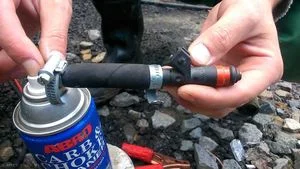
On an injection engine, just like on a carburettor one, injectors get clogged over time. A situation may arise where the tightness of the injector needle valve is compromised: they begin to leak (drip) an excessive amount of fuel into the combustion chamber. Naturally, under such conditions, the engine will run unstably, misfire, and the RPM will fluctuate ("hunt"), especially at idle.
In this case, it is recommended to clean the injectors. This procedure should be performed using special cleaning agents every 60,000 to 70,000 kilometres, regardless of the petrol grade you use.
Faulty Sensors
The operation of an injection engine is based on commands from the Electronic Control Unit (ECU), which in turn receives information from sensors located in the engine. Accordingly, upon receiving incorrect information, the control unit may command the formation of an overly rich mixture, leading to black smoke from the exhaust pipe. Black smoke will be just an external sign of the malfunction. The car will also lose its dynamic characteristics, the engine will misfire or sputter, and the idle speed will fluctuate.
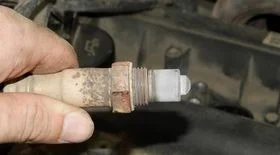
To diagnose sensors, you can use either a diagnostic scanner or a standard multimeter. When black smoke occurs when starting a cold engine, check the Mass Air Flow (MAF) or Manifold Absolute Pressure (MAP) sensor, coolant temperature sensor, and throttle position sensor first. If it happens on a hot engine, check the oxygen sensor (lambda probe) as well.
Fuel Pump and Pressure Regulator
In cars equipped with injection engines, the fuel pump is located directly in the fuel tank and supplies petrol under high pressure to the fuel rail. In some cases, the pressure in the rail turns out to be higher than necessary (for example, due to a faulty fuel pressure regulator), causing overflow in the injection chamber. Consequently, black smoke appears from the exhaust at startup and/or during idling and driving.
Diagnosing the fuel system is a rather complex task, and it is best entrusted to specialists. In particular, the pressure in the rail is checked using a pressure gauge. Often, increased pressure is created not by the pump itself, but by a seized fuel pressure regulator or a pinched return line.
Black Smoke from a Diesel Exhaust
It is necessary to distinguish between a normal amount of exhaust gases and an excessive amount, especially considering that the gases have a characteristic black colour (soot).
For any diesel engine, there are 4 main reasons why black smoke comes out of the exhaust pipe:
- lack of air (such as a clogged air filter, or damage to the intake pipe or turbine);
- low compression;
- leaking injectors (especially noticeable during sharp acceleration or driving under load);
- incorrect injection timing angle (an early angle leads to increased soot formation).
More details on these and other causes follow below.
Diesel Particulate Filter (DPF)
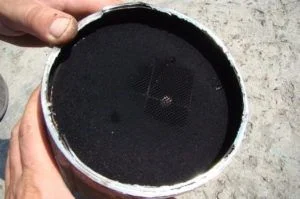
Black smoke from a diesel exhaust will depend on which environmental standards the car's engine meets. Modern environmental standards, in particular Euro 5, require the installation of a diesel particulate filter (DPF), the task of which is to clean exhaust gases from harmful particles.
With a removed or damaged particulate filter, black smoke may come from the exhaust pipe when revving the engine. If the filter is clogged, the engine loses power, and the control unit may attempt to regenerate (burn off) the filter, which is also accompanied by smoke.
High-Pressure Fuel Pump
In diesel engines, the high-pressure fuel pump (HPFP) is responsible for supplying and metering fuel. Accordingly, if it malfunctions, it can deliver more diesel than necessary, causing overflow, which leads to dense black exhaust gases.
On older types of diesel engines (classic), it is enough to check the operation of the pump—its performance and output pressure. In modern diesel engines, particularly those equipped with the Common Rail system, it also makes sense to check the sensors that send information to the engine ECU. Incorrect data from them can cause black smoke from the exhaust pipe.
Injection Timing Angle
In conventional (classic) diesel engine systems, the injection angle may be set incorrectly, including due to stretching of the timing chain or belt. This can cause black smoke to appear.
Note that in modern Common Rail diesel systems, the advance angle is set automatically by the engine control unit. If the angle is off in such a system, it is necessary to check the functionality of the crankshaft/camshaft position sensors and the ECU itself.
Turbocharged Engines
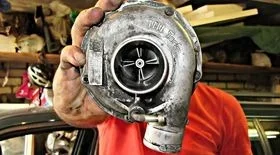
Engines equipped with turbines have their own nuances. In particular, the turbine itself can be the cause of black smoke. Under normal operating conditions, it forces air in under pressure. If the turbine is faulty (under-boost) or there is a leak in the intake tract (torn hose, hole in the intercooler), less air enters than normal, but the same amount of fuel is supplied. This imbalance (rich mixture) inevitably leads to black smoke.
Intake Tract
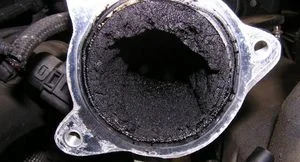
A fairly common cause of black smoke is reduced flow capacity in the intake tract. Most often, the critical element here is the air filter. It can be clogged for trivial reasons—it hasn't been changed for a long time, or not in accordance with the service schedule.
Consequently, less air passes through it than is necessary for normal operation, while fuel is supplied at the same level. Therefore, it is necessary to check the condition of the air filter and, if it is clogged, replace it with a new one.
EGR System
A fairly common reason why black smoke billows from the exhaust pipe is a faulty Exhaust Gas Recirculation (EGR) system. The EGR valve gets clogged with soot over time and can seize in the open position.
Accordingly, exhaust gases constantly enter the intake manifold, displacing fresh air (oxygen). This naturally leads to a lack of oxygen for fuel combustion, which in turn leads to the appearance of black smoke from the exhaust.
Consequences of Increased Soot Formation
The first negative aspect you will notice is a decrease in engine power accompanied by increased fuel consumption. But if you are wondering what the consequences of black smoke are and whether you can drive a car with such a symptom, 5 main warnings can be noted:
- harm to the environment due to increased soot and CO content in exhaust gases;
- strain on the catalytic converter (and DPF)—they clog up quickly;
- piston and valve burnout (due to local overheating and fuel continuing to burn in the exhaust);
- valve malfunction (sticking due to carbon deposits);
- risk of hydrolock (in extreme cases, if an injector is pouring a stream of fuel).
Have you encountered black smoke from the exhaust pipe? What are your thoughts on this? Share your opinion in the comments.
You might also be interested to learn about:
- Black smoke from the exhaust on VAZ 2106
- Black smoke from the exhaust on VAZ 2114
Was this article useful?
Your feedback helps us improve our content.
Related Materials

Discussion (0)
No comments yet!