Oil Change Interval Calculator Based on Fuel Consumption
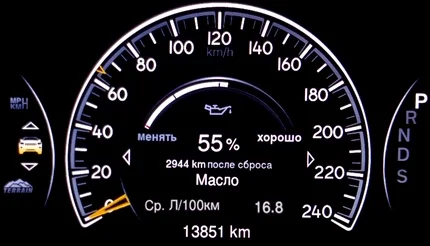
In modern urban driving conditions, the engine oil change interval should not be determined solely by the manufacturer's recommendations, but rather based on fuel consumption and the quality of the lubricant used. You might drive about 30 kilometres and spend two hours or more doing so due to traffic jams, rather than half an hour. During this time, fuel is consumed because the engine is running, and consequently, the oil's resources are being depleted. Manufacturers, however, provide average figures. They assume that at least 70% of journeys, from one service to the next, take place on motorways with average fuel consumption and nominal crankshaft speeds. Naturally, this is rarely realistic, requiring a more thorough method for calculating the engine oil's service life.
How Oil Lifespan is Calculated
Experienced drivers suggest two reasonably accurate formulas for calculating the mileage before an oil change. The first, similar to that used by some German, American, and Japanese car manufacturers, is based on engine hours. The second focuses on fuel consumption. Generally, the difference between their results is no more than 1,000 km, which is acceptable given the mileage specified by the manufacturer.
Since high-end vehicles often feature an engine hour counter and a dashboard prompt indicating when an oil change is due, we aim to assist owners of standard budget vehicles that usually lack such counters. We provide a calculator to determine the change interval based on actual fuel consumption.
This calculator helps anyone estimate how long the oil will last and at what mileage it should be changed. To verify the accuracy of these calculations, you can compare them with data from your car's trip computer (if available) or calculate the engine oil resources in engine hours using the appropriate formula. The calculation procedure is as follows:
- Divide the manufacturer's recommended mileage by your average speed (combined city and motorway driving). This gives you the number of engine hours the engine must run before an oil change.
- Calculate the average between your motorway speed and city speed.
- Multiply the average number of engine hours by the calculated average speed. This gives you the required distance.
Service Life of Engine Oil
Once you have the average number of hours the engine operates, it is easy to determine if your oil can last the period specified by the car manufacturer, as many oil producers indicate the guaranteed operating hours on the packaging. The general trend is as follows:
- Mineral oil — approx. 150 hours;
- Semi-synthetic — no more than 250 hours;
- Synthetic (API SM/SN) — up to 350 hours;
- LongLife oils — at least 400 hours.
Also, note that engines with larger displacement capacities hold more oil, resulting in less load on the lubricant. Consequently, the interval is individual for each engine and depends on operating conditions.
How the Online Calculator Determines Oil Change Intervals
Our online oil change interval calculator based on fuel consumption is the simplest way to determine the correct interval without delving into details like the number of engine hours or average speed. Regardless of how you drive or if you sit idling, fuel is still burnt in the engine, and consumption will differ from the manufacturer's estimates. Accordingly, wear and tear trends adjust the oil's service life. The calculation result is based on the ratio between the estimated and actual combustion under specific operating conditions.
How to Calculate the Oil Change Time on the Calculator
To calculate the practical mileage before an oil change based on fuel consumption, enter three values into the appropriate fields: the recommended mileage before replacement (usually 10,000–15,000 kilometres), the manufacturer's specified fuel consumption per 100 km (found in the vehicle manual), and the actual average fuel consumption per 100 km, which is displayed on the dashboard of any modern fuel-injected or diesel car. Click the "Calculate" button to get the result.
You will receive an answer regarding when to change the engine oil. This is derived from real data on the volume of fuel used, contrasting the manufacturer's reliance on ideal operating conditions with the harsh realities of mixed driving modes (particularly relevant in cold seasons and city driving).
Frequently Asked Questions
-
How often should mineral oil be changed?
Mineral oil should be changed at least every 5,000 km. If you base the frequency on engine hours, which is more accurate, you should aim for 150 engine hours. However, like total mileage, this figure can vary as it depends on the crankshaft rotation speed (RPM).
-
How often should semi-synthetic engine oil be changed?
There are no long-lasting semi-synthetic oils; the additives in such lubricants do not last long, and viscosity changes significantly over time, causing breakdown products to pollute the engine. The maximum replacement frequency is around 10,000 km. However, if operating conditions are slightly more difficult or the number of engine hours is higher (and for semi-synthetics, this should not exceed 250), it is better to reduce this interval to 8,000 km.
-
How often should synthetic engine oil be changed?
Synthetic oils allow for a service interval of up to 30,000 kilometres under ideal conditions, but in real-world driving (50/50 city/motorway), they last no more than 15,000 km. However, the frequency of changing synthetic oil, and lubricants of other classes, strongly depends on fuel quality, operating conditions, driving style, and vehicle usage frequency. Therefore, the recommended periodicity is no less frequently than every 12,000 km. In terms of engine hours, the engine will work for about 300 hours over such a distance, which is close to the maximum lifespan of most standard synthetic oils.
-
When should LongLife oil be changed?
The LongLife label indicates that the oil is designed for flexible service intervals recommended by car manufacturers. The maximum interval for LongLife engine oil is 25,000–30,000 km or every 2 years of operation. Under extreme engine operating conditions, such oil with extended replacement intervals is changed twice as often. Thus, in countries with variable fuel quality and under heavy loads, LongLife oils have a service interval of 15,000 km (about 400 engine hours).
Was this tool useful?
Your feedback helps us improve our content.



Discussion (0)
No comments yet!