White Deposits on Spark Plugs

Spark plugs operate in an aggressive high-temperature environment. This results in the formation of fine light-grey, beige, yellowish, or brown deposits on them. The colour is caused by fuel impurities and iron oxide formed when oxygen reacts with the steel housing. The colour and texture of the deposits change when faults occur. If the deposits on the spark plugs are white, there are likely issues with the fuel or ignition systems, or incorrect fuel is being used. Our guide will help you understand why white soot appears on plugs, accurately determine the root cause, and eliminate it.
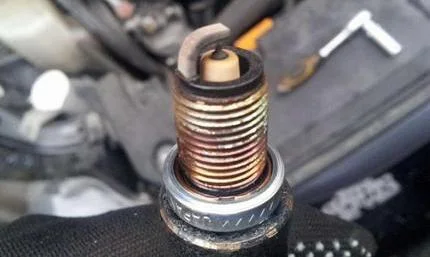
Why white deposits occur on spark plugs
The reason white deposits form on spark plugs is overheating resulting from a disrupted combustion process due to a non-optimal air-fuel ratio or incorrect ignition timing. Due to exposure to elevated temperatures, dark carbonaceous deposits burn off, while the more stubborn light-coloured ones remain.
Studying the formations allows you to understand what the white deposits on the spark plug electrode indicate. Non-uniform, glossy, and heavy textured coatings are different in nature.
What causes faint white deposits?
A faint white coating on a spark plug may turn out to be a false alarm. A light white deposit is quite a typical phenomenon on spark plugs after converting to LPG (Liquid Petroleum Gas).
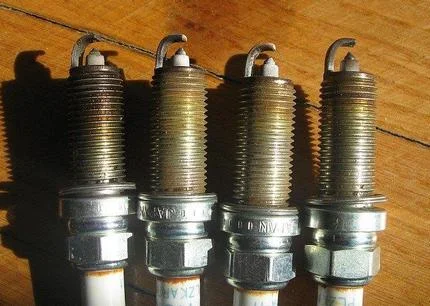
Light white deposits on plugs are not always a sign of a problem
Gas does not contain special additives that improve its properties in the same quantity as petrol. Its combustion temperature is slightly higher, yet almost no soot is formed. Therefore, a small amount of white deposit on spark plugs in a vehicle with LPG is normal.
A faintly expressed white coating on cars without a gas installation indicates unstable mixture formation or the use of undesirable fuel additives. For example, leaded petrol containing lead additives can leave silvery-white deposits. Malfunctions in the carburettor or injection sensors can also cause a whitish coating.
Causes of white deposits on spark plugs
| Cause of thin white deposits | What does it affect? | What should be done? |
|---|---|---|
| Worn spark plugs and filling up with low-quality petrol | The engine cycle is disrupted, loads on the cylinder-piston group and crank mechanism increase. Engine life is significantly reduced. | Refuel with quality fuel, heat-clean and brush, or replace the spark plugs. |
| Low-quality fuel (old stale petrol, diluted fuel, counterfeit petrol, etc.) | Engine stability is disrupted, component wear accelerates, and the risk of breakdown increases. Using counterfeit petrol with TEL (tetraethyllead) additives destroys the oxygen sensor and catalytic converter in injection engines. | Drain the poor-quality fuel, fill up with normal petrol from a trusted station. Heat-clean and clean or replace the spark plugs. |
| Low-octane fuel | The risk of mixture detonation (knocking) increases, and engine wear accelerates manifold. Pistons, connecting rods, pins, valves, and other parts suffer from impact loads. | Fill up with quality petrol with the Octane Rating specified by the car manufacturer. Clean or change the spark plugs. |
| Unstable air-fuel mixture | The engine cannot settle into a normal working rhythm, parts are subjected to load fluctuations and wear out faster. | Check the operation of the carburettor or injection sensors (MAF, IAT, and MAP), injectors, and intake tightness. |
Why do glossy white deposits appear on spark plugs?
A thin glossy white deposit on spark plugs does not in itself negatively affect engine operation, but it points to a number of faults. On an old car with white spark plugs, the carburettor is likely forming the mixture incorrectly. The probable reasons for this are:
- contamination of the throttle valve;
- clogged or incorrectly selected jet diameter;
- incorrect ignition timing;
- air leak (vacuum leak) between the carburettor and the intake manifold.
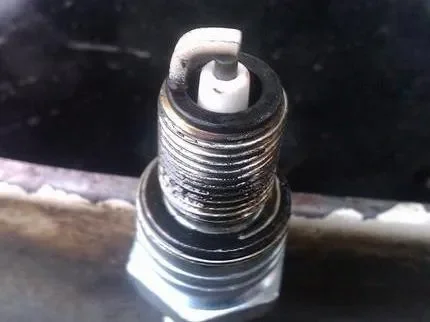
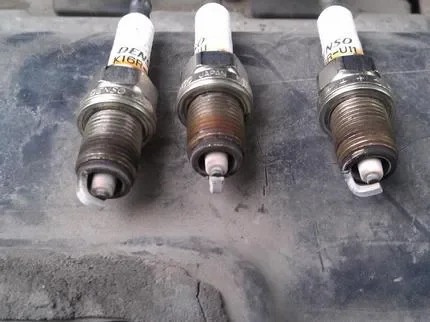
On modern cars, other reasons for the formation of white deposits are more common: the injection system doses fuel and sets the ignition timing based on ECU firmware algorithms. First, check the engine for air leaks, for example, using a smoke machine. When unmeasured air bypasses the Mass Air Flow (MAF) sensor or Manifold Absolute Pressure (MAP) sensor, the ECU cannot correctly dose the petrol and adjust the ignition timing to the actual mixture composition. If there are no leaks, diagnose the MAF, MAP, and Intake Air Temperature (IAT) sensors. ECU errors P0171, P1124, P1135, and P1137 indicate an excessively lean mixture.
Sources of glossy white coating on plugs: table of causes
| Cause of glossy white deposits | What does it affect? | What should be done? |
|---|---|---|
| Lean fuel mixture | Overheating of cylinders and valves, increased wear of pistons, rings, and cylinder walls, accelerated degradation of engine oil, loss of power and torque. | Adjust the ignition timing and check the carburettor/injection sensors, diagnose the intake for air leaks. |
| Air leak in the intake | The mixture becomes lean; see the previous point for consequences. | Check the intake system (hoses, plenum and intake manifold gaskets, injector seals) for leaks, e.g., using smoke, and restore airtightness. |
| Clogged injectors | The engine actually receives less fuel than the ECU "thinks", resulting in a lean mixture; see above for consequences. | Diagnose the injection nozzles, clean and flush them, and if necessary, replace them with new ones. |
| Untimely sparking due to incorrectly set ignition | The engine loses power, overheats, wear accelerates, and the risk of valve burnout and damage to other exhaust elements or the catalytic converter increases. | Check sensor marks, timing belt installation, and adjust the ignition system. For cars with LPG, it is advisable to install a timing advance processor or dual-mode ECU firmware for gas to correct ignition angles. |
| Incorrectly selected spark plug | Deterioration of spark formation, overheating of plugs and their accelerated wear, loss of power. | Replace spark plugs, selecting a part with the heat range specified by the manufacturer. |
| Fuel octane rating lower or higher than required | Deterioration of ignition, loss of power. Detonation and accelerated wear of the connecting rod and piston group if the octane rating is too low. Overheating of exhaust elements, valve burnout, and catalytic converter failure if the rating is too high. | Drain the poor-quality petrol and fill up with normal fuel. On an older car designed for low-octane fuel, or when using LPG (especially methane, which has an octane rating of about 110), adjust the ignition for the new fuel, and use a timing advance processor for correction when using gas. |
Velvety white deposits on plugs — why does it happen?
Thick, rough white deposits on spark plugs indicate that foreign substances, such as antifreeze or oil, are entering the combustion chamber.
Identifying a thick white coating indicates the need for urgent engine diagnostics. Timely replacement of valve stem seals or the cylinder head gasket can help avoid expensive repairs.
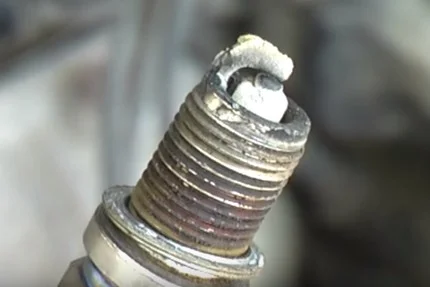
Velvety thick white coating on a plug can occur due to antifreeze ingress or excess oil
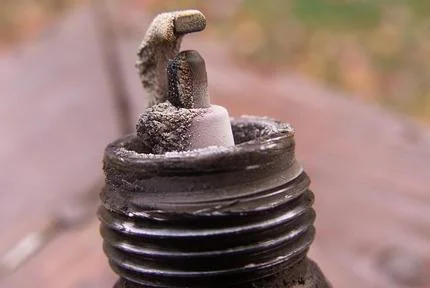
Another example of thick and velvety white deposits due to excess oil
Thin white deposits with a velvet texture, as with glossy (slightly shiny) deposits, usually indicate incorrect mixture formation or untimely spark delivery. The causes depend on the type of fuel system.
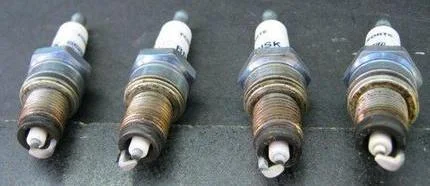
Thin matte deposits caused by advanced ignition
If you see a thin velvety white deposit on the spark plugs of an old car, the carburettor needs checking. The jet is likely clogged, or the settings have drifted. It is also advisable to check the distributor and other ignition system elements, as advanced ignition could be the culprit.
Light-coloured deposits also form due to additives and impurities in the fuel. At the same time, it is worth checking if there is excessive oil consumption or if antifreeze is disappearing.
On more modern cars, if you see white deposits on the spark plugs, the injection system needs to be diagnosed via OBD-2. Another purely injection-related culprit is the injectors, which dose fuel incorrectly when clogged or worn.
Reasons for the appearance of white velvety coating on plugs
| Cause of velvety white deposits | What does it affect? | What should be done? |
|---|---|---|
| Incorrect spark plug operation, lack of energy for the spark | An incorrectly selected plug cannot ensure the normal operating mode of the internal combustion engine, causing it to run unstably and wear out faster. | Replace the plugs, selecting suitable ones from the manufacturer's catalogue. |
| Ignition system problems | Check coil(s), HT leads, and distributor (for older cars); replace faulty parts. | |
| Incorrect fuel injection setting | Inappropriate fuel quantity/quality due to incorrect adjustment or clogging of the carburettor. | Check carburettor adjustment, clean it, or replace it. |
| On injection systems, the ECU doses the mixture incorrectly due to incorrect sensor readings or injector malfunction. | Perform OBD-2 diagnostics, check the correctness of MAF or MAP and IAT sensor readings, Lambda sensor, and diagnose injectors. Replace faulty parts. | |
| An air leak occurs in the intake system, the mixture becomes lean, and the engine runs hot; valves may burn out, and wear accelerates. | Check the intake system for leaks using a smoke machine. | |
| Fuel filter clogged | Petrol flow is reduced, the mixture becomes lean. Power is lost, engine wear accelerates. | Replace the fuel filter. |
| Leaking head gasket or breach of channel integrity | A breach in the head gasket or channels leads to coolant entering the combustion chamber. Oil may also enter the antifreeze or vice versa. The engine cannot run normally, an emulsion forms in the sump, lubrication shortage and overheating occur, and the engine fails quickly. | Check for bubbles in the coolant expansion tank while the engine is running. Monitor changes in antifreeze level. Check oil for light emulsion (mayonnaise-like sludge). If problems exist, remove the cylinder head, inspect, repair if necessary, and replace the gasket. |
| Excessive amount of oil entering the combustion chamber | Crankcase gas pressure due to loss of compression forces oil into the intake. Spark formation deteriorates, engine wear accelerates, smoke comes from the exhaust. | Check the oil separator/breather in the cylinder head; repair if faulty. If the cause is worn rings and pistons, strip and inspect the engine, and perform a partial or full overhaul. |
| Oil control piston rings cannot cope with removing excess lubricant from cylinder walls; exhaust smokes, oil consumption increases. | Perform an engine decarbonisation treatment; if that doesn't help, strip and inspect the engine, repair the cylinder-piston group, replace rings (at a minimum), and clean pistons. | |
| Valve stem seals have lost elasticity. Oil consumption increases, smoke appears, stability is lost, and engine wear accelerates. | Replace the valve stem seals. |
How to correctly check spark plugs for white deposits
The colour of deposits on plugs allows you to prevent serious malfunctions in time, so it is necessary to check their condition periodically. To check spark plugs for white deposits, you will need:
- a spark plug socket (usually a deep 16mm or 21mm socket);
- a torch (to examine the deposits more closely if light is poor);
- a rag (to wipe the spark plug wells before removal, and to cover them during inspection).
The procedure is simple and will take about 10 minutes. This is enough to detect white deposits on spark plugs: whether it's injection, LPG, or carburettor makes no difference, as the manipulations are the same. The only difference is that on some models you will first need to remove the HT leads from the plug, while on others you must remove individual coils secured with screws — for these, you will additionally need an appropriate spanner or socket with a ratchet.
How to clean white deposits from spark plugs
If there are few deposits, cleaning the white soot from the spark plugs will allow you to continue using them and avoid immediate replacement. There are two effective ways to remove the coating: mechanical and chemical; we will discuss each in more detail below.
Removing white deposits mechanically
Before cleaning carbon deposits on a spark plug, you should select the right abrasive. To remove small deposits from electrodes, the following are suitable:
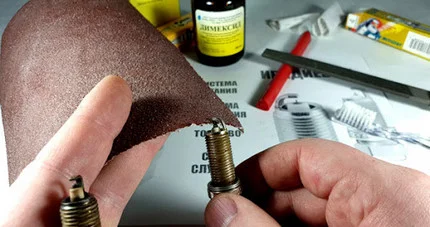
Cleaning deposits with fine-grit sandpaper
- a stiff wire brush for rust removal (manual or a rotary tool attachment);
- fine-grit sandpaper (P240 and higher).
First, remove the plug and rub it with a wire brush to remove deposits. The coating in the gap between the electrodes can be carefully cleaned out with thin sandpaper folded in half. Be careful: proper cleaning of spark plugs should not leave scratches.
If white deposits appear on new spark plugs, even though the car is not fitted with an LPG system, check if the plug matches the engine's heat range before cleaning. If the part is selected incorrectly, there is no point in cleaning it — immediate replacement is required.
Removing white deposits from plugs with chemicals
Another method of removing coating is chemical cleaning of the spark plug. Various highly active agents can be used for this:
- organic solvents (carburettor cleaner, petrol, kerosene, acetone, paint thinners, DMSO);
- rust converter or phosphoric acid solution;
- vinegar or 20% ammonium acetate solution;
- sanitary ware cleaners and limescale removers (like Cillit).
The chemical method is preferable, as you can clean the plug of coating without damaging its electrodes. This is especially important for expensive plugs with precious metals, the thin layer of which is easily damaged by abrasives. Chemical cleaning of spark plugs from white coating is performed as follows:
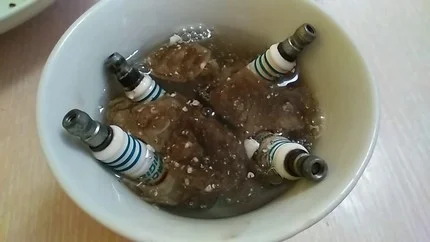
Cleaning spark plugs from deposits chemically
- Treat the plug with a solvent to degrease it.
- Place the working part in the cleaning agent.
- Leave for anywhere from 10 minutes to several hours, monitoring the rate of deposit removal.
- Rinse the plug with solvent again.
After removing the deposits, the plugs can be dried and installed in the engine. To accelerate chemical reactions, non-flammable liquids can be heated, but not brought to a boil. DMSO (Dimexide) must be heated because it begins to solidify even at room temperatures.
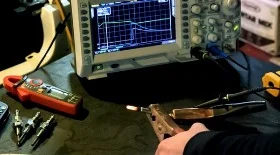
Thermal cleaning of plugs, i.e., torching, is not very effective on its own because white deposits are heat-resistant. However, it can be successfully used in conjunction with mechanical or chemical cleaning by periodically heating the electrodes over a flame for 1–5 minutes, depending on the degree of contamination.
How to prevent white deposits on spark plugs
Timely maintenance of spark plugs allows you to extend their service life, but it is much more important to eliminate the reasons for the appearance of the coating:
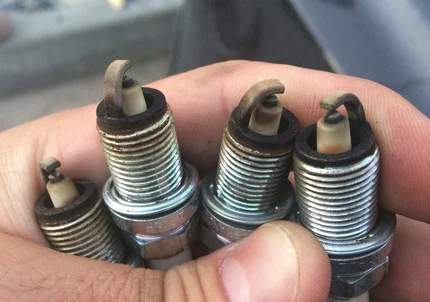
If deposits appear on new plugs, urgent diagnostics must be performed
- If new plugs quickly become covered with deposits, you need to diagnose the fuel system, adjust the carburettor or change injection sensors, and check and clean the injectors.
- If deposits form while driving on LPG, it is necessary to use an ignition timing advance processor or install dual-mode firmware for gas and petrol.
- To avoid overheating, monitor the coolant level and change it at the end of its service life.
- If white deposits on spark plugs appear after filling up at a dubious petrol station, change the fuel and do not fill up there in the future.
- Use high-quality engine oils to reduce the amount of deposits.
- To extend the service life of fuel system parts, reduce the interval for changing fuel and air filters by 2–3 times (to every 6,000–9,000 miles / 10,000–15,000 km).
If you discover black and white deposits on spark plugs or other unusual formations, do not delay diagnostics. This will allow you to avoid fatal consequences for the engine.
Was this article useful?
Your feedback helps us improve our content.
Discussion (0)
No comments yet!