Why Engine Oil Turns Dark
If the oil turns dark, implies something is wrong—or so some car owners think. But is this actually the case? After all, it is one thing if it turns black quickly after a change (when it is still relatively fresh), and another if it happens after a couple of thousand kilometres of driving.

There are several reasons why this happens: low-quality lubricant, a dirty engine, long intervals between changes, switching to a higher quality oil, overheating, or even poor quality fuel. How can you understand when rapidly darkening engine oil is good and when it is bad? It is not always a negative consequence requiring anxiety. You must pay attention to additional factors and check the quality of the oil.
Gradual ageing and darkening is a natural process. Therefore, the main task for the car enthusiast is to determine whether the darkening is caused by positive or negative factors.
Darkening oil is normal
So why does engine oil darken? Is it normal or not? The blackening process is linked to the fact that, among other functions, the lubricating fluid has a cleaning role. During engine operation, fuel combustion occurs, creating complex chemical compounds. Their composition depends largely on the type and quality of the fuel, but they are always harmful to the engine. These residues are located directly inside the engine (on cylinder walls, pistons, rings, and so on).

One of the oil's tasks is to clean these deposits from the surfaces of the mentioned parts and keep them suspended in its composition, preventing them from settling in the engine. That is, combustion residues transfer into the engine oil, leading to its natural darkening.
Pay attention to the difference in fuel used and the degree of engine oil darkening. Burning diesel fuel produces darker exhaust gases; similarly, blacker deposits form in the engine. Consequently, the oil darkens faster. regarding engines running on gas (LPG/CNG), the situation is reversed. Due to the chemical composition, gas produces fewer sludge deposits (compared to petroleum products), so they emit much cleaner exhaust gases. Accordingly, the engine oil in this case will remain cleaner. Conversely, those who know it should change colour will wonder why the oil remains clean. With traditional petrol usage, the condition of the engine oil will be somewhere between diesel and gas.
Another important question in this context is after how many kilometres should the oil darken. If the oil darkens quickly (almost immediately after replacement or after a short distance)—this is a reason to perform diagnostics and look for the causes discussed below. If the oil darkens naturally, approximately by two to three thousand kilometres—this is likely a natural process. If there are no additional symptoms of engine malfunction (it runs stably, does not consume excess oil), then there is no cause for concern.
Reasons why oil turns dark
We will divide the reasons described below for why dark engine oil appears over time into two categories—positive and negative. Let's start with the positive ones.
Using higher quality oil
When higher quality oil is in the sump than was used previously, it will start to darken faster because it has genuinely started to clean, not just lubricate. It is known that different manufacturers' formulations can differ not only in the oil base but also in the amount of detergent additives (not to mention different types). Therefore, if a change has been made, the high-quality oil will contain more washed-out deposits (meaning it will be darker) than the previous one.
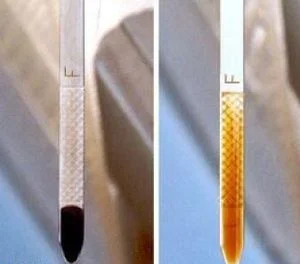
You can drive on such oil, but you need to carefully monitor its condition using the dipstick. If it looks uniformly viscous and uniformly dirty, it means the cleaning process is proceeding normally. However, it makes sense to change the lubricant a little earlier than required by the schedule.
Natural darkening
That is, the use of genuinely high-quality oil. As described above, if the oil has not darkened abruptly but changes its colour gradually—then everything is fine. It is simply doing its job of cleaning engine elements from soot and oxidation products, keeping them in suspension (within the moving volume).
More or less high-quality oil becomes almost black (but not thick) approximately by 2,000...3,000 kilometres. If the oil is not of very high quality, it will turn black around 800...1,000 kilometres or, conversely, even after 3,000 km will remain light (if it lacks cleaning properties). This applies to petrol engines. Regarding diesels, their oil turns black approximately twice as fast; on some engines, it may be dark already at a mileage of one thousand kilometres.
Another interesting fact is that engine oil will darken faster if the power unit has recently undergone a major rebuild. In this case, the darkening is caused by a large amount of metal shavings formed as a result of the interaction of friction pairs. After a rebuild, it is recommended to change the oil earlier than the scheduled time.
High Ash Content and Low TBN
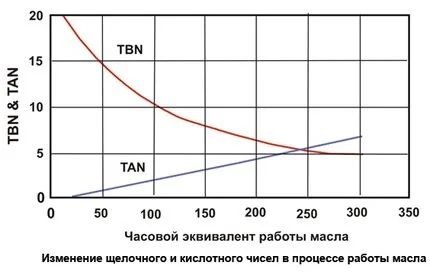
Sulphated ash content in engine oil is an indicator for determining additives containing organic metal compounds (specifically salts of zinc, potassium, magnesium, calcium, barium, sodium, and other elements). In simple terms, this indicator characterises the amount of non-combustible elements remaining after burning and the detergent capabilities of the oil. Sulphated ash is interesting in this context because it is directly proportional to the Total Base Number (TBN).
Often, in the performance characteristics of oils (on canisters or in shop descriptions), you can find information about the sulphated ash value and/or the TBN. The higher these are, the higher the detergent capabilities of the lubricant, meaning the darker the oil will be during operation. Conversely, the lower these values, the more transparent it will be.
Therefore, a high ash value can also be a cause of oil darkening. However, these values are selected and recommended by the car manufacturer for a specific engine. Note that oils with a low TBN require more frequent changes, approximately every 6,000...7,000 kilometres. They are very sensitive to fuel quality and lose their properties faster.
Now let's move on to the negative reasons, that is, those that need to be eliminated.
Counterfeit Oil
Fake oil has been poured into the sump. Unfortunately, this problem is currently quite relevant, as counterfeits are illegally produced for almost all popular oil brands. Naturally, these products are of very poor quality, do not perform their assigned functions, and, among other things, darken quickly. Such oil must be replaced with genuine oil as soon as possible. It is advisable to flush the engine beforehand.
This also includes cases where a car owner buys low-quality oil from a lesser-known brand at a low price. Such compositions often have low performance characteristics and consequently lose them quickly, which is expressed, among other things, in their rapid darkening.
Combustion products entering the oil
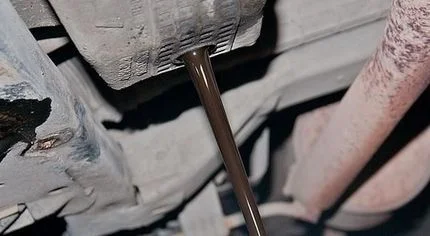
In this case, the oil begins to oxidise rapidly, loses its performance properties, and changes its colour to a darker shade. The main reason here is a loss of sealing, which in turn can be caused by various factors—a blown cylinder head gasket, damaged piston rings, and so on. Petrol can also get into the oil, diluting it and changing its colour. If the piston rings are worn, a situation arises where oil remaining on the cylinder walls burns along with the fuel. In this case, the oil will also turn black. Typically, excessive lubricant consumption is observed in this scenario.
In any case, you need to inspect the engine yourself or seek help from a service centre. If there is an engine malfunction, it is impossible to give a single definitive answer within this article as to why the oil in the motor is darkening.
Blow-by gases entering the engine
If the crankcase ventilation system is faulty, blow-by gases can re-enter the engine and come into contact with the lubricant. Because of this, it oxidises faster, loses its performance properties, and darkens. The more gas that enters the engine, the faster this process occurs.
Poor quality fuel
Since the main cause of oil darkening is the products of petrol/diesel combustion, the fuel composition is very important here. The cleaner the fuel (made to a higher standard, without additional impurities), the less dark its combustion products will be, and therefore the engine oil will be less dark. Therefore, try to fill the tank with good fuel; this will not only increase engine power but also protect it from excessive wear and increase the lifespan of the engine oil.
There is a belief that only diesel contains many impurities, but this is not actually the case. Petrol can also be of poor quality. You can verify this simply by igniting it and looking at the colour of the resulting smoke.
Overheating of the oil
If the engine runs for a long time or constantly under heavy conditions (high ambient temperature, poor ventilation, high RPM/loads), its temperature will naturally be very high. Consequently, the oil temperature will be too. In such conditions, the lubricant will literally "cook" and turn black. This is even more relevant if, firstly, the oil is old (high mileage), and secondly, its level in the sump is low.
In the worst cases, under severe conditions, the lubricant can turn into a sludge-like substance, which can lead to very sad consequences, up to an engine rebuild. Therefore, you should try not to operate the engine constantly at critical loads, or choose oils with appropriate performance characteristics (viscosity, approvals, etc.). By the way, incorrect choice of oil viscosity (very thick or conversely very thin) can also often lead to overheating of the engine in general and the oil in particular.
Summary
If the oil darkens gradually and the engine is running normally, there is no reason to worry. Under normal conditions, oil darkens after approximately two thousand kilometres. Then it starts to turn black and thicken. If the lubricant acquires a dark shade very quickly (after 300...500, maybe up to a thousand kilometres for a petrol engine, or in some cases even immediately after replacement), then this is a reason to reflect and perform engine diagnostics. If your car runs on gas, the oil is usually transparent even with significant mileage (however, it still needs to be changed according to the schedule, despite its transparency).
What to do if engine oil turns dark
The answer to the question "what to do?" depends on the cause of the darkening. Here are general recommendations based on the causes mentioned above and methods for preventing this phenomenon. That is, what actions to take so that the darkening is natural, not a "pathology".
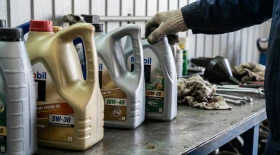
First. Buy genuine, high-quality engine oil. Choosing oil involves considering a large number of factors. Try to make purchases in proven shops. Currently, there is a growing trend where popular lubricant manufacturers protect their products online. That is, the authenticity of the oil canister can be checked using a smartphone connected to the internet.
Second. Regularly monitor the condition of your car's engine. Control the functioning of the cylinder-piston group elements, piston rings, gaskets, and seals; in short, prevent the mixing of fuel and oil.
Third. Change the engine oil regularly. Ideally, this should be done in accordance with the car manufacturer's recommendations. Usually, a value of 10,000...15,000 kilometres is indicated. However, in this case, it is better to judge by engine hours. After approximately 250...300 hours of engine operation, the additive responsible for holding dark sediments stops working, and deposits begin to settle inside. If inspection of the lubricant reveals carbon deposits and/or solid particles, it is better to perform a replacement as soon as possible. In some cases, it makes sense to flush the engine with special compounds. Practical experience shows that with leisurely driving in a metropolis (especially with numerous traffic jams), it makes sense to change the oil as early as 7,000...9,000 kilometres.
Fourth. Constantly check the oil level in the engine sump using the dipstick, preventing it from falling below the MIN mark (but excess oil is also harmful). Similarly, if the oil pressure warning light on the dashboard activates, check the level immediately and top up the lubricant if necessary.
Fifth. Use the oil prescribed by the car manufacturer. This applies to viscosity values as well as other performance characteristics, specifically manufacturer approvals, API standards, ACEA standards, and so on.
Sixth. When switching to a higher quality oil (with a large amount of detergent additives), it makes sense to flush the engine. However, this is not recommended if the engine has high mileage and low-quality oil was constantly used in it. In this case, there is a risk that the detergent additives of the new lubricant will remove carbon deposits from various worn areas of friction parts and/or micro-cracks in the oil system, leading to leaks and a drop in compression.
Seventh. Change the oil filter on time. Its mandatory replacement is performed with every oil change. Leaving the old filter when pouring in fresh oil is unacceptable, as the dirty element will negate the entire effect of the procedure.
Eighth. Try to fill the tank with good fuel, that is, refuel at proven petrol stations, and conversely, do not pour any surrogates into the car that can often be found on sale at suspiciously low prices.
Ninth. Do not operate the engine under excessive loads and/or high RPM. If you need to use the car at high ambient air temperatures, you must ensure the normal operation of the engine ventilation system, as well as select oil with appropriate characteristics (viscosity and temperature tolerances).
Tenth. Constantly monitor the proper condition of the crankcase ventilation system. Do not allow gases to re-enter the engine excessively. If you suspect a malfunction, perform an inspection immediately, and if necessary, a repair.
Was this article useful?
Your feedback helps us improve our content.



Discussion (0)
No comments yet!