How to Choose Diesel Engine Oil: Characteristics and Specifications
Engine oil for diesel engines differs from similar fluids designed for petrol units. This is due to the differences in their operation, as well as the conditions in which the lubricant has to work. Specifically, a diesel engine operates at different temperatures, uses a different fuel-air mixture, and the combustion processes occur more rapidly. Consequently, diesel oil must possess certain characteristics and properties, which we will discuss in this article.
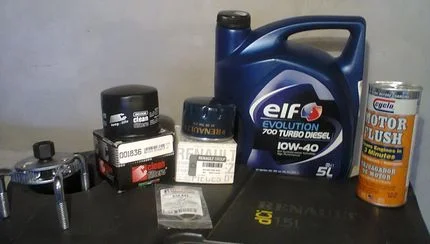
How to choose oil for a diesel engine
Before moving on to the oil characteristics, it is worth briefly mentioning the conditions in which it has to operate. Firstly, it must be remembered that fuel in diesel engines does not burn completely, resulting in a large amount of soot. And if the diesel fuel is of poor quality and contains a lot of sulphur, the combustion products have an even more detrimental effect on the engine oil.
Since the compression ratio in a diesel engine is much higher, blow-by gases enter the crankcase more actively, and the crankcase ventilation system does not always cope with them perfectly. This is the direct reason why diesel engine oil ages faster, loses its protective and cleaning properties, and oxidises.
There are several parameters that a motorist must take into account when choosing a lubricant. We can highlight these three main characteristics of motor oil:
- quality — requirements are set out in API/ACEA/ILSAC classifications;
- viscosity — SAE standard;
- oil base — mineral, synthetic, or semi-synthetic.
The relevant information is indicated on the packaging. However, the car owner must know the requirements specified by the vehicle manufacturer to choose a fluid with the correct parameters.
Characteristics of diesel engine oil
Let's examine these parameters in more detail so that the car owner can navigate them when purchasing and choose the lubricant that is most suitable for their car's engine.
Oil quality according to API and ACEA
The classification is prescribed by international standards API, ACEA, and ILSAC. In the API standard, the symbols "C" and "S" indicate the engine type. The letter "C" (Commercial) means the product is intended for diesel engines. And "S" (Service) is for petrol engines. Most modern oils are universal and have a dual marking, for example, SN/CF.
Besides indicating the engine version, there is a more detailed decoding of the marking. The following classes are relevant for diesel engines (in order of increasing requirements):
- CF — for engines with indirect injection (often found on older cars and SUVs from the 90s);
- CH-4, CI-4, CI-4 Plus — for high-speed 4-stroke engines designed to meet emission standards up to 2004 (suitable for use with fuel containing up to 0.5% sulphur);
- CJ-4 — for engines with Diesel Particulate Filters (DPF) and other exhaust treatment systems (introduced in 2006);
- CK-4 and FA-4 — the most modern standards (since 2017) for high-load engines with the latest neutralisation systems.

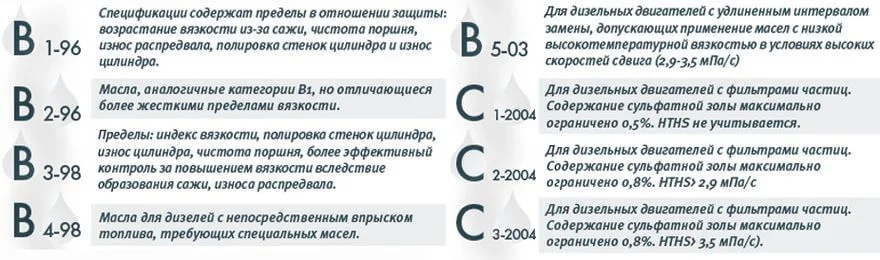
You can also identify "diesel" oil by the European ACEA specification. Here it is important to divide oils into Full SAPS and Low SAPS:
- B3, B4 — intended for engines with direct injection but without a diesel particulate filter (DPF). They possess high cleaning properties.
- C1, C2, C3, C4, C5 — oils compatible with exhaust after-treatment systems (DPFs and catalytic converters). Mandatory for most modern foreign diesel cars (Euro-4, Euro-5 and higher).
- E4, E6, E7, E9 — specifications for heavy trucks and special machinery.
Oil viscosity
The ease of pumping oil through channels and system elements depends directly on the viscosity value. Additionally, oil viscosity affects the speed of its delivery to friction pairs, battery charge consumption, and crankshaft resistance during winter starting. Therefore, for passenger diesel cars, lubricants with a viscosity rating of 5W (down to -30°C), 10W (down to -25°C), and less frequently 15W (down to -20°C) are most often used. The lower the number before the letter W, the more fluid the oil will be in freezing temperatures.
Energy-conserving oils have low viscosity (e.g., 0W-20, 0W-30). They create a thin film, saving fuel. However, such oils should be used only if expressly permitted by the engine manufacturer, as they can lead to increased wear in older engines.
Climate must be taken into account when choosing. If temperature fluctuations are large and mileages are huge, commercial vehicles sometimes use seasonal changes. In the passenger segment, "all-season" oils (5W-30, 5W-40, 10W-40) are used almost universally.
If the engine has problems with the cylinder-piston group or compression, and also starts poorly in the cold, using oil that is too thin may exacerbate pressure drop issues, although it will make it easier for the starter to turn the engine.
Diesel engine oil base
It is also common to divide oils into types depending on their base. There are three known types: mineral (the cheapest), synthetic, and semi-synthetic.
The main factors are compliance with the characteristics required by the car manufacturer, as well as the authenticity of the product. The second factor is extremely important, as counterfeit products are found on the market.
Which oil is best for a turbo-diesel
The operating mode of a turbocharged diesel engine differs from a standard one. The turbine rotation speed is immense (can exceed 150,000–200,000 rpm), causing the temperature in the turbine bearing assembly to be very high. Therefore, oil for a diesel with a turbine must have high thermal stability and resistance to oxidation.
Considerations for choosing a brand remain the same: adherence to the car manufacturer's recommendations. The opinion that only "synthetics" are needed for a turbo-diesel is not far from the truth: mineral oils clog the oil feed pipes to the turbine with carbon deposits faster, leading to its failure.
Here are popular manufacturer specifications for turbo-diesels:
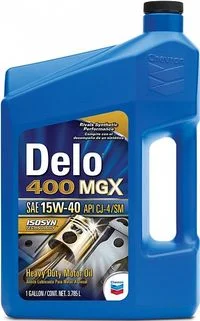
DELO diesel engine oil
- Mitsubishi, Mazda, Toyota, Kia, Hyundai often refer to ACEA B3/B4 classification (without DPF) or ACEA C2/C3 (with DPF).
- Renault-Nissan — require RN0720 specification for diesels with DPF.
Other car manufacturers have their own strict approvals:
- Ford often recommends WSS-M2C913-D (or C) for turbo-diesels.
- Volkswagen (as well as Skoda, Seat, Audi) requires VW 507.00 approval for most modern diesels. For older models without unit injectors and DPF, 505.00/505.01 were suitable.
- In General Motors vehicles (Opel, Chevrolet) produced after 2004-2010, it is recommended to use Dexos 2 oil.
- For turbo-diesel BMWs, the main approval is BMW Longlife-04.
It is worth noting that a turbocharged car needs an occasional drive under good load to burn off deposits in the exhaust system. And do not forget to let the turbine cool down at idle after a drive (if there is no turbo timer).
Brands of diesel engine oils
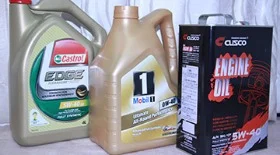
Popular global car manufacturers often recommend specific brands with which they have contracts (e.g., Castrol, Shell, Total) or release oils under their own brand (OEM).
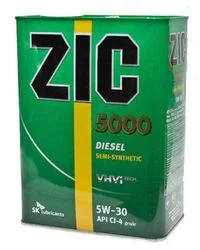
Popular ZIC XQ 5000 oil
When choosing oil, the following indicators are important:
- presence of official approvals (not just "compliance");
- ash content (sulphated ash) — for cars with a DPF, it must be low (Low SAPS);
- Total Base Number (TBN) — the ability to neutralise acids;
- flash point and volatility (NOACK).
| Brand | Description | Viscosity | API/ACEA |
| ZIC XQ 5000 10W-40 | Popular oil for diesel machinery. Produced in South Korea. Can be used in commercial vehicles. | 10W-40 | API CI-4; ACEA E6/E4. Approvals: MB 228.51, MAN M 3477, VOLVO VDS-3, Renault VI RXD. |
| LIQUI MOLY 5W-30 TopTech-4600 | High-quality oil from a German manufacturer, suitable for systems with particulate filters. | 5W-30 | ACEA C3; API SN/CF; MB 229.51; BMW Longlife 04; VW 505.00; Dexos 2. |
| ADDINOL Diesel Longlife MD 1548 | Heavy Duty Engine Oil class. Oriented towards heavily loaded engines (trucks, special machinery). | 15W-40 | CI-4 Plus, SL; E7. Approvals: MB 228.3, Volvo VDS-3, Renault RLD-2, Caterpillar ECF-2. |
| Mobil Delvac MX 15W-40 | Oil for light and heavy commercial vehicles. Distinguished by high cleaning properties. | 15W-40 | API CI-4/CH-4/SL; ACEA E7; MB 228.3; Volvo VDS-3; MAN M3275-1. |
| CHEVRON Delo 400 MGX | American oil for diesels (special machinery, trucks, pickups). Works with EGR systems. | 15W-40 | API: CJ-4, CI-4; ACEA: E9, E7. Approvals: MB 228.31, Volvo VDS-4. |
| Castrol Magnatec Professional 5w30 | Popular oil for passenger cars. | 5W-30 | ACEA A5/B5; API CF/SN; Meets Ford WSS-M2C913-D. |
The price of diesel oil depends on factors: the type of base (synthetic is usually more expensive), the additive package, and the brand. We recommend choosing a happy medium and not chasing the cheapest options, as repairing diesel fuel equipment is very expensive.
Differences between diesel and petrol engine oils

Factors harmful to oil
As is well known, the diesel internal combustion engine is based on the principle of compression ignition. The mixture burns faster in diesel engines, making it more difficult to ensure complete combustion, which leads to the formation of soot. Oil in a diesel engine turns black much faster — this is normal, as it holds soot in suspension, preventing it from settling on parts.
Due to this and the high pressure in the chamber, the oil oxidises faster. The main difference between diesel oil and its analogues for petrol engines is a more powerful package of dispersant (dirt-holding) and detergent additives, as well as increased resistance to oxidation.
Summary
Oil for a diesel engine must strictly comply with the manufacturer's specifications. This applies to both standard engines and turbocharged units.
Also, try to fill up at proven petrol stations. Sulphur in fuel is the main enemy of oil, quickly reducing its Total Base Number (TBN).
Was this article useful?
Your feedback helps us improve our content.





Discussion (0)
No comments yet!