How often should you change your engine oil?
Many drivers are unsure exactly when to change their engine oil or doubt the service intervals provided by the manufacturer. And for good reason. Changing oil strictly every 6,000 to 9,000 miles (10,000–15,000 km) is often not entirely accurate.
It is far better to be guided by engine hours (moto-hours) and average speed. The answer to how often you should change the oil involves many components. These include the manufacturer's recommendations, operating conditions (heavy/light load, city/motorway, frequent/infrequent use), mileage since the last service, total mileage, the vehicle's technical condition, and the type of oil used.
Additional factors also influence the interval: engine hours, engine power and displacement, and time elapsed since the last change (even if the car hasn't been driven). Below, we will explain in detail how often to change engine oil, the different types available, and other useful information.
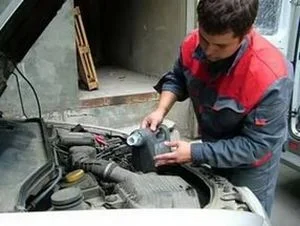
For those who don't want to dive into the details, here is the short answer regarding intervals: in urban conditions, oil lasts for 5,000–7,000 miles; on the motorway or in light traffic, it can last up to 9,000 miles. The only way to know precisely is through a laboratory analysis of the used oil.
What affects the frequency
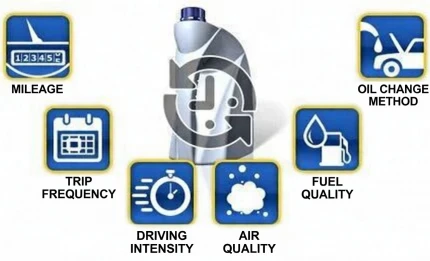
Every car manufacturer specifies when to change the engine oil in the owner's manual. However, this information is not always perfectly tailored to real-world use. Typically, the documentation states a value of 10,000 to 15,000 kilometres (approx. 6,000–9,000 miles), though this varies by model. In reality, the mileage between changes is influenced by several factors.
10 indicators affecting engine oil lifespan
- Fuel type (LPG, petrol, diesel) and its quality
- Engine displacement
- Brand of previously used oil (synthetic, semi-synthetic, mineral)
- Classification and type of oils used (API and Longlife systems)
- Condition of the engine oil
- Method of replacement
- Total engine mileage
- Technical condition of the car
- Operating conditions and modes
- Quality of consumables (filters, etc.)
Manufacturer prescriptions are not included in this list because the service interval is often a marketing concept for them.
Operating Modes
First and foremost, how the vehicle is used affects the timing. Without going into complex transient processes, two main modes should be mentioned: motorway and city. When a car travels on the motorway, the mileage accumulates much faster, and the engine receives proper cooling. Consequently, the load on the motor and the oil is not as high. Conversely, if the car is used in the city, the mileage will be significantly lower, but the load on the engine will be higher because it often sits at traffic lights and in congestion with the engine running. Cooling is often insufficient in these scenarios.
Therefore, it would be more technically correct to calculate when to change the engine oil based on engine hours, as is done in heavy goods vehicles, agricultural machinery, and marine equipment. Let's give an example. A car will cover 6,000 miles in city conditions (with an average speed of 12–15 mph) in about 400–500 engine hours. However, the same 6,000 miles on the motorway at 60 mph takes only 100 engine hours. Furthermore, the operating conditions for the engine and oil on the motorway are much gentler.
Driving in a metropolis is rightly equated to driving in severe off-road conditions in terms of how it degrades the oil. This is especially true if the oil level in the sump is below average, or worse, below the minimum mark. Also, remember that in summer hot weather places a much greater load on the oil due to high temperatures, including heat radiating from hot tarmac in cities.
Engine Size and Type
What affects oil change frequency
The more powerful the engine, the easier it handles load changes and difficult operating conditions. Consequently, the impact on the oil is less severe. For a powerful engine, cruising on the motorway at 60–80 mph does not exert a significant load; it remains below average. As speed increases, the load on the engine—and therefore the oil—changes smoothly.
It is a different story for small city cars. Typically, they have "short" gear ratios, meaning the gears are designed for a limited speed range and operating RPM. Consequently, small-displacement engines experience greater loads in critical modes than powerful ones. When the load on the motor increases, the temperature of its pistons rises, and the amount of blow-by gases increases. This leads to a general rise in temperature, including the oil temperature.
Small-displacement turbocharged engines (e.g., 1.2 TSI and others) have an especially hard time. In this case, the load is compounded by the turbine.
Additional Factors
This includes high operating temperatures (thermostat settings), poor crankcase ventilation (especially in city driving), use of low-quality or unsuitable oil, sludge in oil channels, a clogged oil filter, and the oil's working temperature range.
It is considered that the optimal engine oil change interval is between 200 and 400 engine hours under various operating modes, excluding maximum load (e.g., driving at top speed and maximum RPM).
The type of oil used also plays a significant role—mineral, semi-synthetic, or fully synthetic.
Why Regular Oil Changes Are Necessary

Dashboard indication
What can happen to a car if the engine oil is not changed for a long time? To answer this, one must understand its functions. Any oil consists of a "base" and a package of additives. It is these additives that protect engine parts.
During operation, and even when parked, continuous chemical breakdown of additives occurs. Naturally, this process happens faster when driving. Natural deposits form in the sump, oxidation processes occur with individual oil components, and viscosity and pH acidity levels change. These facts answer the question — why you must change the oil at least once a year.
Some car manufacturers and oil producers specify the change interval not by mileage but by time, typically in months.
Under significant load, these processes occur even faster, especially at high temperatures. However, modern manufacturers are constantly improving the technologies and chemical compositions of their oils. Therefore, they are capable of resisting contamination and high temperatures for a longer time.
In many modern vehicles, the ECU (Electronic Control Unit) constantly monitors when the engine oil needs changing. Naturally, this decision is based on an empirical method. It uses actual data—average engine RPM, oil and engine temperature, number of cold starts, speed, and so on. Additionally, the programme accounts for errors and technical tolerances. Therefore, the computer reports only an approximate time for a service.
Unfortunately, you may encounter counterfeit or lower-quality oils on the market. Considering that fuel quality can also vary depending on the region, the oil change periodicity needs adjustment. Specifically, if asking how many miles to wait, the recommended amount should be reduced by approximately one-third. That is, instead of the frequently recommended 10,000 miles, change it every 6,000–7,000 miles.
Change the oil AT LEAST once a year, regardless of whether you drive the car or not. In any case, the shelf life of oil inside an engine is from 6 months to 1 year maximum.
Here are the causes and consequences of delayed oil changes:
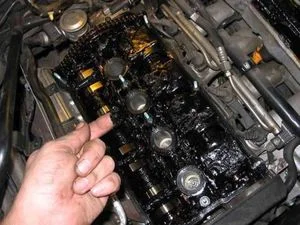
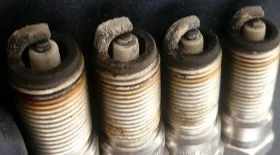
Deposits in the engine
- Formation of deposits. This is caused by the breakdown of additives or contamination of the oil with combustion by-products in the sump. The consequences are a significant reduction in power, increased toxicity of exhaust gases, and black smoke.
- Significant engine wear. The cause is the oil losing its properties due to changes in additive composition.
- Increased oil viscosity. This can happen specifically due to oxidation or polymerization of additives caused by improper oil selection. Problems arising from this include circulation difficulties, significant wear of the engine and its components. Resulting oil starvation can lead to cold start difficulties, and in critical cases, engine failure.
- Spun connecting rod bearings. This occurs because oil channels become clogged with thickened sludge. The smaller the cross-sectional area, the greater the load on the bearings. This leads to overheating and spinning.
- Significant turbocharger wear (if equipped). There is a high risk of rotor damage. Used oil exerts significant abrasive impact on the compressor shaft and bearings, causing scratches and damage. Furthermore, dirty oil leads to clogged lubrication channels in the compressor, which can cause it to seize.
Do not operate a vehicle with burnt and thickened oil. This subjects the motor to significant wear.
The problems described above are typical for cars operated in urban conditions, which are considered some of the most difficult for an engine. Below are interesting factual data obtained experimentally to help you decide on the mileage interval.
Results of Oil Experiments
Specialists from a well-known automotive magazine conducted six-month studies of several types of synthetic oils under conditions simulating city traffic jams (idling). To do this, engines ran for 120 engine hours (analogous to 6,000 miles of motorway driving) at 800 rpm without cooling airflow. Interesting facts were obtained...
First, the viscosity of all motor oils during prolonged idling is significantly lower than when driving on the motorway, up to a certain critical moment. This is because, at idle, blow-by gases and unburnt fuel enter the crankcase and mix with the oil. A small amount of fuel can end up in the oil.
The drop in viscosity is around 0.4...0.6 cSt (centistokes). This value is within 5...6% of the average level, meaning viscosity remains within normal limits. However, this only happens up to a certain point.

Clean and used motor oils
Approximately at the 70th–100th engine hour (varying by oil, but the trend is identical), viscosity begins to rise sharply. Moreover, it rises much faster than in "motorway" mode. The reasons are as follows: The oil is constantly in contact with products of incomplete combustion and reaches critical saturation. These products have a certain acidity, which is transferred to the oil. The lack of ventilation and low turbulence of the fuel-air mixture (since the piston moves relatively slowly) also play a part. Because of this, the combustion rate is lower, and the ingress of exhaust gases into the crankcase is maximal.
The common belief that idling creates a large amount of dirt was not experimentally confirmed. However, the amount of high-temperature deposits was low, while the amount of low-temperature deposits (sludge) was high.
Regarding wear products, their quantity is significantly higher in oil used in "traffic jam" mode than in "motorway" mode. The reason lies in the low piston speed and high operating temperature of the oil (lack of airflow). As for oil consumption (burn-off), each oil behaves differently. However, it can be stated that due to high operating temperatures and increased thickness, consumption will also increase.
Based on this information, let's try to systematise the data and answer the question of how many miles you should drive before changing the oil.
Recommendations for Engine Oil Replacement
Let's look more closely at the periodicity. As mentioned above, manufacturer recommendations should be treated with healthy scepticism. Do not ignore them completely, but make your own adjustments. If you drive only in the city (statistically, this applies to the majority of drivers), this means the oil is being used in severe conditions. Remember, the less oil in the sump, the faster it ages. Therefore, the optimal level is slightly below the maximum mark on the dipstick.
We wrote above that it is smarter to calculate the replacement periodicity by engine hours. However, the difficulty lies in converting miles to engine hours to get an answer. Let's look at two methods that allow you to empirically, yet quite accurately, calculate when to change synthetic (and other) oils. For this, your car must have an ECU that shows the average speed and fuel consumption for at least the last thousand miles (the longer the distance, the more accurate the calculation).
Method One (Calculation by Speed). You need to know your average speed over the last few thousand miles and the manufacturer's recommended mileage interval. For example, let's say the recommendation is 9,000 miles (approx. 15,000 km), and your average city speed is 18 mph.
To calculate the number of engine hours, divide the distance by the speed. In our case: 9,000 / 18 = 500 engine hours. This implies that to follow the manufacturer's mileage recommendation under these conditions, you would need oil capable of lasting 500 hours. In reality, such oils are rare for standard passenger cars.
Here is a table showing oil types and their corresponding resource in engine hours according to API (American Petroleum Institute):
| Oil Correspondence to Resource Engine Hours | |
|---|---|
| Oil Type | Resource (Engine Hours) |
| Mineral | 150 |
| Semi-synthetic | 250 |
| Synthetic Oils | |
| API SJ/SL | 250 |
| API SM/SN | 300...350 |
| Polyalphaolefins (PAO) | 350...400 |
| Esters | 400...450 |
Suppose the engine contains SM/SN class oil with a working resource of 350 hours. To calculate the actual safe mileage, multiply 350 hours by your average speed of 18 mph. The result is 6,300 miles. As you can see, this is vastly different from the 9,000 miles suggested by the manual. If your average speed is lower, say 13 mph (typical for heavy traffic), with the same 350 hours, you get only 4,550 miles! It becomes clear why it is necessary to divide the manufacturer's recommended mileage by 1.5 to 2 times.
Method Two (Fuel Consumption). This is based on the total amount of fuel burned. You need the manufacturer's specified fuel consumption (e.g., in MPG or L/100km) and your actual consumption from the trip computer.
Let's use an MPG example. Suppose the manual says your car does 35 MPG, but in reality, you are getting 26 MPG. The service interval remains 9,000 miles.
Calculate the theoretical fuel needed for 9,000 miles: 9,000 / 35 = approx. 257 gallons. Now, calculate how far you can travel on that same amount of fuel using your actual consumption. 257 gallons * 26 MPG = 6,682 miles.
We have an electronic calculator available that allows you to calculate the actual mileage until replacement using theoretical and actual fuel consumption data.
However, the simplest and most effective method is a visual inspection. Do not be lazy; periodically open the bonnet and check if the oil has thickened or smells burnt. If the oil drips from the dipstick like water, it is a sure sign it needs replacing. Another method is the "blotter test" on a paper towel. Very liquid oil forms a large, spreading spot, indicating it is time to change. If so, drive to a garage immediately or do it yourself.
How Often to Change Oil in a Diesel Engine
For diesel engines, the same calculation logic applies as for petrol units. However, the working fluid in diesels is subjected to greater external impact. Consequently, oil in a diesel engine needs changing slightly more often. Additionally, if you are driving in regions with standard or lower-quality diesel (high sulphur content), the impact is even more severe.
Regarding manufacturer indications (especially from Western manufacturers), similarly to petrol engines, the interval should be divided by 1.5 to 2. This applies to passenger cars as well as vans and light trucks.
As a rule, most owners of diesel vehicles change the oil every 4,000 to 6,000 miles depending on the car and oil used.
Theoretically, oil choice is based on the Total Base Number (TBN). It measures the amount of active anti-corrosion additives and indicates the ability to neutralise acids. The higher the number, the greater the capacity to neutralise aggressive products formed during oxidation. For diesel engines, TBN is typically within 11...14 units.
The second important number is the Total Acid Number (TAN). It characterises the presence of products that provoke corrosion and wear.
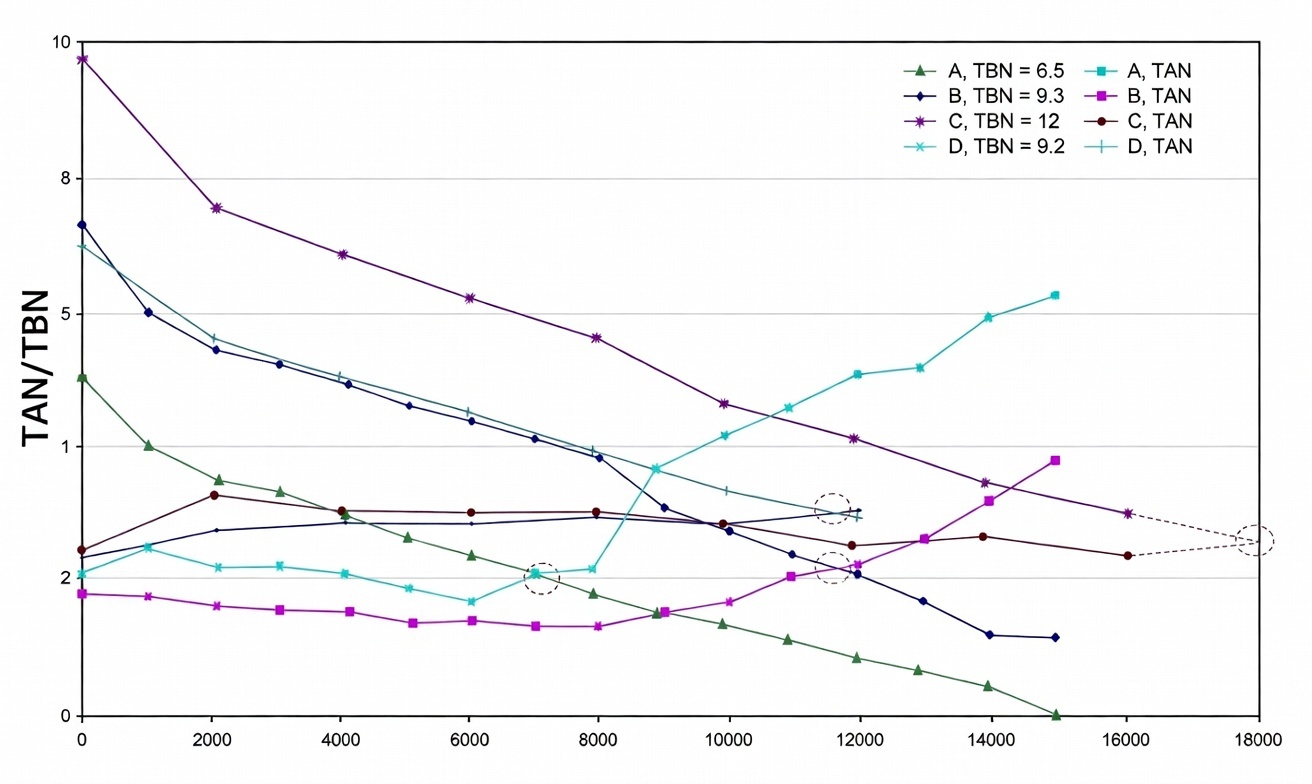
However, before deciding how many engine hours a diesel oil lasts, consider one nuance: Can you use oils with a low TBN in regions with variable fuel quality (high sulphur)? During operation, TBN falls and TAN rises. The point where their graphs cross indicates the oil is fully depleted.
Here are graphs from tests of four oil types with different TBN/TAN values. For the experiment, four types were used (labelled A, B, C, D):
- Oil A — 5W30 (TBN 6.5);
- Oil B — 5W30 (TBN 9.3);
- Oil C — 10W30 (TBN 12);
- Oil D — 5W30 (TBN 9.2).
TAN/TBN Relationship Chart in Diesel Engine Tests of a Ford Transit Vehicle
Engine mileage, km
As seen from the graph (implied), the results were:
- Oil A (TBN 6.5) — depleted after 4,300 miles (7,000 km);
- Oil B (TBN 9.3) — depleted after 7,100 miles (11,500 km);
- Oil C (TBN 12) — depleted after 11,000 miles (18,000 km);
- Oil D (TBN 9.2) — depleted after 7,100 miles (11,500 km).
The most resilient was the oil designed for heavy-duty diesel engines. Conclusions:
- A high TBN is critical where diesel fuel quality is poor (high sulphur). Using such oil ensures longer, safer engine operation.
- If you are certain of your fuel quality (standard European diesel), oils with a TBN around 11...12 are sufficient.
- Similar reasoning applies to petrol engines. It is better to use oils with TBN = 8...10. This allows you to avoid overly frequent changes. If using oil with TBN = 6...7, be prepared for more frequent replacement.
Generally, diesel engines require slightly more frequent changes than petrol ones. Selection should factor in both Acid and Base numbers.
Conclusions
Every driver must decide for themselves when to change the engine oil, taking individual circumstances into account. We recommend using the calculation methods based on engine hours and fuel consumption described above. Additionally, always visually assess the condition of the oil on the dipstick. This will significantly reduce engine wear and save you from expensive repairs. Always buy quality oils recommended by the manufacturer.
Was this article useful?
Your feedback helps us improve our content.



Discussion (0)
No comments yet!