Motor Oil Litre to Kilogram Converter
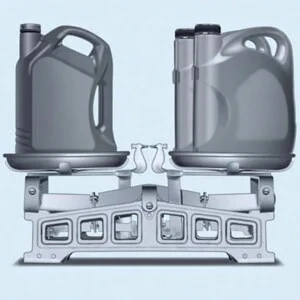
The mass of engine (motor or transmission) oil depends on its chemical group composition. Its weight is determined by the density of the substance within a unit of volume (kg/m³). Oil density is determined using a pycnometer at +20 °C, as it depends directly on temperature: the higher the temperature, the lower the density of the petroleum product.
To convert litres (l) of motor oil to kilograms (kg) or vice versa, you must refer to the density value. You can find this in the average value table or in the specific technical characteristics provided by the lubricant manufacturer (for precise data). If the temperature of the oil differs from the standard, a correction coefficient is applied.
How much does 1 litre of motor oil weigh?
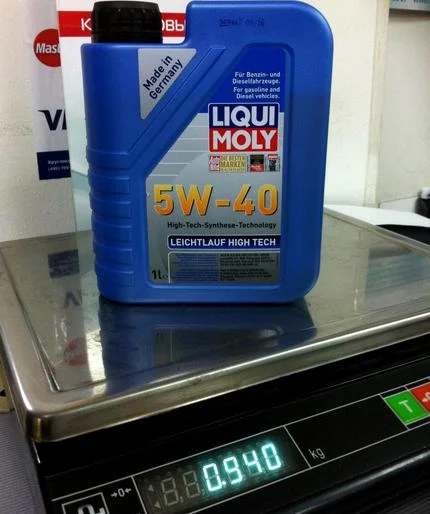
The relationship between the mass and volume of oil is defined by its density. However, this parameter, like viscosity, depends heavily on temperature. Therefore, to accurately convert motor oil litres to kilograms, measurements should be taken at room temperature. It is also worth noting that density changes depending on the quantity and quality of additives. If you need to convert litres/tonnes of used oil to kg, the density parameters will differ due to impurities from wear products and soot (increasing by 4–6%).
To determine the weight of 1 litre of oil, the density formula is used: ρ = m / V, where ρ is density (kg/m³); m is mass (kilograms); V is volume (m³).
Motor Oil Density Table
The density indicator of motor lubricants varies in the range of 0.84 – 0.91 kg/l depending on the SAE classification and kinematic viscosity (cSt). Furthermore, it is quite unstable and decreases as temperature increases.
| Density of synthetic oils from most manufacturers depending on viscosity | |||
|---|---|---|---|
| SAE Motor Oil Class | Density, kg/l | ||
| at 20 ⁰С | at 100 ⁰С | at 120 ⁰С | |
| 0w40 | 0.842…0.858 | 0.766…0.773 | 0.739…0.743 |
| 5w30 | 0.863…0.868 | 0.781…0.786 | 0.762…0.770 |
| 5w40 | 0.867…0.872 | 0.775…0.781 | 0.751…0.757 |
| 10w30 | 0.865…0.868 | 0.801…0.808 | 0.792…0.800 |
| 10w40 | 0.865…0.870 | 0.810…0.817 | 0.801…0.804 |
| 15w40 | 0.910…0.915 | 0.863…0.871 | 0.853…0.860 |
| 20w50 | 0.872…0.880 | 0.835…0.842 | 0.822..0.831 |

Note that the higher the oil temperature, the lighter it is within the same volume! Therefore, to convert motor oil from litres to kg or kilograms to litres, consider the temperature and use a correction factor if it differs from the standard benchmark of 20 degrees Celsius.
If the petroleum product's temperature is above +20⁰С, the correction value must be subtracted; if lower, it must be added to the density specified in the specifications. The correction coefficient applies to each degree of temperature difference.
Density Correction Coefficients
| Table of density correction coefficients for oil temperature changes | |||
|---|---|---|---|
| Density kg/l at 20⁰С | Temp correction per 1⁰С | Density kg/l at 20⁰С | Temp correction per 1⁰С |
| 0.650-0.659 | 0.000962 | 0.8300-0.8399 | 0.000725 |
| 0.660-0.669 | 0.000949 | 0.8400-0.8499 | 0.000712 |
| 0.670-0.679 | 0.000936 | 0.8500-0.8599 | 0.000699 |
| 0.6800-0.6890 | 0.000925 | 0.8600-0.8699 | 0.000686 |
| 0.6900-0.6999 | 0.000910 | 0.8700-0.8799 | 0.000673 |
| 0.7000-0.7099 | 0.000897 | 0.8800-0.8899 | 0.000660 |
| 0.7100-0.7199 | 0.000884 | 0.8900-0.8999 | 0.000647 |
| 0.7200-0.7299 | 0.000870 | 0.9000-0.9099 | 0.000633 |
| 0.7300-0.7399 | 0.000857 | 0.9100-0.9199 | 0.000620 |
| 0.7400-0.7499 | 0.000844 | 0.9200-0.9299 | 0.000607 |
| 0.7500-0.7599 | 0.000831 | 0.9300-0.9399 | 0.000594 |
| 0.7600-0.7699 | 0.000818 | 0.9400-0.9499 | 0.000581 |
| 0.7700-0.7799 | 0.000805 | 0.9500-0.9599 | 0.000567 |
| 0.7800-0.7899 | 0.000792 | 0.9600-0.9699 | 0.000554 |
| 0.7900-0.7999 | 0.000778 | 0.9700-0.9799 | 0.000541 |
| 0.8000-0.8099 | 0.000765 | 0.9800-0.9899 | 0.000528 |
| 0.8100-0.8199 | 0.000752 | 0.9900-1.000 | 0.000515 |
| 0.8200-0.8299 | 0.000738 | ||
How to convert motor oil to kilograms and litres?
To accurately determine the weight of one litre of oil or convert kg to litres, you need to know the density data from the product's datasheet. The formulas used for unit conversion are: m = p * V and V = m / p.
On average: 1 kg of oil equals 1.09 litres; a 4-litre canister will weigh 3.5 kg; and if you convert a 200-litre barrel, it will weigh 180 kilograms.
Table for converting oil from litres to kg
| Conversion of volume and weight of motor oils | ||
|---|---|---|
| SAE Viscosity | Kilograms in 1 Litre | Litres in 1 kg |
| 0w40 | 0.85 | 1.17 |
| 5w30 | 0.86 | 1.16 |
| 5w40 | 0.87 | 1.15 |
| 10w30 | 0.87 | 1.15 |
| 10w40 | 0.86 | 1.16 |
| 15w40 | 0.91 | 1.10 |
| 20w50 | 0.88 | 1.14 |
Why calculate oil conversion to kg?
Our online kg-to-litre oil calculator allows you to find out the weight of one litre (or more) of motor oil. It also lets you recalculate the weight in kilograms or tonnes for any other type of oil, fuel, and other lubricants. Conversely, it helps you understand how many litres of raw material should be present for a specific weight.
This conversion may be necessary not only for reporting in organizations dealing with fuels and lubricants or transport companies but also for ordinary car owners. How so?
As an additional indicator for the need to change oil. The weight of one litre changes by 4–7% during the wear process over 1–2 years. If you rely on the average density indicator, weighing fresh oil can help determine its quality. Poor quality motor oil may contain harmful additives, causing it to have increased density and, consequently, greater weight. Or conversely, due to insufficient additives for a specific oil type, the mass will be lower than it should be according to the manufacturer's specifications.
Furthermore, knowing that oil volume increases when heated, some suppliers heat the lubricant during bottling on the filling line and pour by volume rather than weight. As a result, the oil canister on the shelf will appear compressed and be several grams lighter—essentially, an under-fill. An individual buyer might not notice a shortage of a few millilitres, but on a manufacturing scale, the difference is significant. Therefore, by weighing such oil and using the conversion calculator, you can detect such shortages.
How to use the motor oil litre to kg calculator?
By default, you can find out how much 1 litre of oil weighs in kg. To perform your own conversion of oil to kg or litres, you need to fill in the fields with the necessary data or select an average value if you need to convert motor oil quantity units.
- Enter the volume in litres or weight in kg/tonnes (you can manually set the required unit of measurement);
- Select the viscosity by clicking on it if you are converting engine oil (this will use the average density value, which appears in the "density at +20°C field") or enter your own oil density value if known (you can choose kg/l or keep kg/m³, depending on the unit provided), which should match reference data;
- If the oil temperature (or other fuel/lubricant fluid) differs from the nominal laboratory indicator, enter (or set with up/down arrows) your difference value in the "temperature correction" field (how many degrees higher or lower);
- Mark which oil (fresh or used) the recalculation is for. By default, the calculator converts to kg or l based on new motor oil that hasn't been run in an engine. However, during operation, its indicators change, and for used oil, a correction must be considered. If you need to convert litres to kilograms (or vice versa) for another type of lubricant or fuel, leave the checkbox as default.
After these settings, you will immediately see how many kilograms a certain number of litres of oil or other fuel and lubricant material weighs.
Frequently Asked Questions
-
How much does a litre of oil weigh?
1 litre of synthetic motor oil with a viscosity of 5w30 and a density of 863 kg/m³ weighs 0.86 kg. If the density indicator is higher due to additives, for example, 910–940 kg/m³, then a one-litre canister of engine oil will weigh more, up to 940 grams. The average weight of 1 litre of vegetable oil at room temperature is 925 g, and this will vary depending on the crop from which it was pressed.
When weighing, remember that oil density can change depending on the ambient temperature. To calculate how much 1 litre of oil weighs more accurately—whether motor, sunflower, or vegetable—consider the correction coefficient. Every +10 degrees Celsius above the nominal value at which density is measured in the lab (+20°C) will make each kilogram of oil 10 grams lighter. -
How much does a litre of 5w40 motor oil weigh?
A litre of 5w40 motor oil with a density in the range of 867…872 kg/m³ weighs 870 grams. However, this is an average figure, as there are synthetic 5W-40 oils that weigh up to 910 grams. The final weighing result will depend on the density of the specific brand of oil. The weight of such motor oil in its packaging is typically 955 g.
-
How much does 5 litres of oil weigh?
The average weight of oil in a 5-litre canister is 4.55 kg. You can only know exactly how much 5 litres of oil weighs by knowing the specific gravity (density) of the liquid in question. For example, motor oil with a density of 910 kg/m³ weighs exactly 4 kg 550 grams, excluding the weight of the canister itself. Sunflower oil will be heavier at 4.65 kg because it has a density of 0.930 kg/l.
-
How much does 200 litres of oil weigh?
A two-hundred-litre barrel of machine oil with a viscosity of 0W40 and an average density of 852 kg/m³ will weigh 170 kg excluding the weight of the container itself. On average, the net mass of both motor oil and sunflower oil with a density of 930 kg/m³ at normal atmospheric pressure (760 mm Hg) is 186 kilograms.
-
How much does a 208-litre barrel of oil weigh?
A 208-litre oil barrel is equal to 55 US gallons. Most motor oils for diesel engines are supplied in 208-litre quantities. How much a 208-litre steel barrel of oil weighs depends on its viscosity, or more precisely, its density. Thus, the weight of oil of this volume will range from 180 kg if it is synthetic to 190 kilograms for semi-synthetic 15W40 or transmission oil 75W-90. The weight of one empty metal barrel is between 18 and 25 kg, so oil specifications often state that a 208-litre barrel weighs 208 kilograms, implying the gross weight rather than the net mass.
Was this tool useful?
Your feedback helps us improve our content.



Discussion (0)
No comments yet!