Engine De-coking

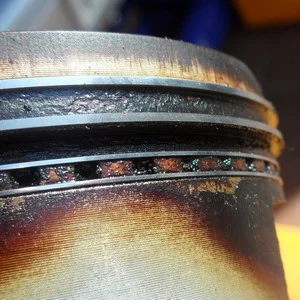
Engine de-coking (carbon removal) and piston ring cleaning is a procedure aimed at removing carbon deposits from the piston group components. Specifically, it involves cleaning the combustion products of low-quality fuel and oil from pistons, rings, and valves. De-coking, whether done as a DIY project or at a service centre, is carried out using special agents — chemical compounds, solvents, and cleaners. Carbon deposits can be removed in four ways, three of which are performed without opening the engine and serve as strictly preventative measures. You can get rid of soot not only with specially designed fluids but also with home-made mixtures. Both can be highly effective. The quality of the de-coking depends on the procedure followed, precision of execution, and suitability for the specific situation.
Any de-coking is best as prevention! Like oral hygiene for a person. It is best performed periodically, not waiting until the engine reaches a critical state where only a complete rebuild can 'resuscitate' it. This is particularly relevant for German engines (VAG and BMW) prone to high oil consumption.
To handle this task, you will need to study the list of popular carbon removal agents, their characteristics, properties, reviews from real-world use, and the instructions for the procedure.
Why is de-coking necessary?
The first logical question for novice car owners is: why do engine de-coking at all? The second is: what can actually clean the cylinder-piston group and the crank mechanism? Carbon build-up on rings reduces their mobility, deposits on the piston reduce the combustion chamber volume, and soot on valves prevents them from operating correctly. This leads to oil consumption, cylinder wall scoring, power loss, valve burnout, and eventually — an engine overhaul. Therefore, the main task of de-coking is to remove deposits from the top of the piston, free up the rings, and clean the oil drainage channels.
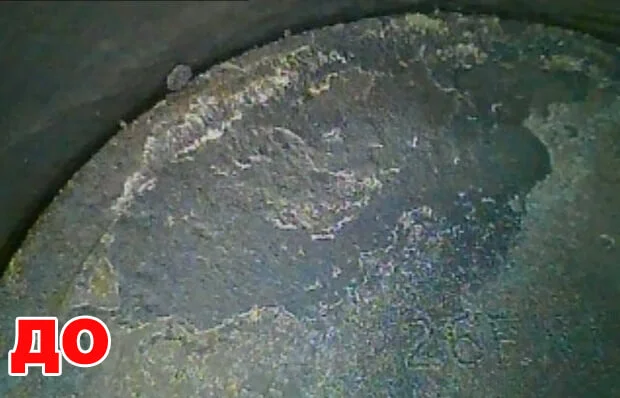

Such a regular procedure will help eliminate faults caused by deposits. In particular, detonation (knocking) will disappear, and minor compression variances between cylinders will even out. However, to get rid of the typical blue oil smoke, you will also need to eliminate the cause of the lubricant entering the combustion chamber.
Chemical agents, falling into the so-called "soft" or "hard" de-coking groups, help deal with deposit products. It is worth noting that each has its pros and cons.
10 Best Agents for Engine De-coking
Taking into account only real-world application results and value, rather than advertising hype, we have compiled a list of 10 agents from different categories, application variants, and carbon-fighting methods. Note that they are suitable for de-coking both petrol and diesel engines, as there is no fundamental difference. There may simply be a thicker or thinner layer of soot.
So, which de-coker is best to choose from all those on the market? Tests showing good results and the number of positive reviews have allowed us to rank popular agents in the following order:
| Product | De-coking Type | Method | Application Variant | Application Area | Additional Procedures |
|---|---|---|---|---|---|
| Mitsubishi SHUMMA | Heavy-duty | Chemical | Without disassembly | Piston group | Oil and filter change required; drop of oil in cylinders needed |
| GZox | Soft | Chemical | Without disassembly | Piston group | Oil and filter change required |
| Kangaroo ICC 300 | Soft | Chemical | Without disassembly | Piston crown and rings | Oil and filter change required |
| XADO Verylube | Heavy-duty | Chemical | Without disassembly | Piston crown and rings | Oil and filter change required; drop of oil in cylinders needed |
| Greenol REANIMATOR | Hardcore | Chemical | Without disassembly and/or specific parts | Piston crown and rings | Oil and filter change required, plus sump cleaning |
| Lavr ML-202 | Heavy-duty | Chemical | Without disassembly and/or specific parts | Piston crown and rings | Oil and filter change required |
| Edial | Dynamic | Chemical | Without disassembly | Piston group | No oil change, but spark plug change needed |
| Acetone and Paraffin (Kerosene) | Hardcore | Chemical/Mechanical | Without disassembly and with disassembly | Piston and rings | Better effect if mixed 1:1 + engine oil. Leave for 12 hours. |
| Dimexidum (DMSO) | Hardcore | Chemical | Without disassembly | Piston crown and rings | Works only at 50-80℃ |
| Oven Cleaner | Hardcore | Chemical/Mechanical | With disassembly | Piston and rings | Keep on for no more than 5 minutes |
* Solvents added as fuel additives for injector cleaning were not included in the list (with the exception of Edial, as it is genuinely a de-coker), because their influence on carbon deposits is minimal; their action is mainly aimed at cleaning injectors, not piston group parts. There are other additives poured into fuel and cylinders, but there is too little data to draw objective conclusions.
** We also want to note separately that we did not include de-cokers poured as oil additives (like BG-109, LIQUI MOLY Oil-Schlamm-Spulung, etc.) in the ranking, because their action is effective only as part of a complex treatment, and cleaning baked-on pistons with them alone is futile.
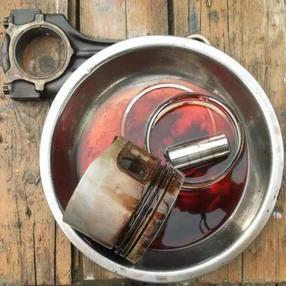
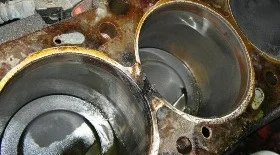
Cleaning piston form carbon
As you can see, not all advertised de-coking agents are universal or worth your attention. Only the first three agents, which are poured into the cylinders, will help cope with stuck rings and improve the oil consumption situation. Others will not give such a joyous effect, especially when the situation is neglected. And if we talk about household products, they are best used exclusively for cleaning valves, pistons, or the engine block during an overhaul, but certainly not for engine de-coking when there is oil consumption and loss of compression. This is because they are very aggressive and can corrode paint, aluminium pistons, or the engine block.
To understand why, and to learn more about each agent, familiarise yourself with the characteristics, application features, and reviews from car owners who have tried one or another fluid designed to remove oil deposits.
Characteristics, Features, and Reviews – Ranking of the Best De-cokers
Best result when soaking valves and pistons. Where carbon isn't eaten away, it becomes soft and is easily removed mechanically.
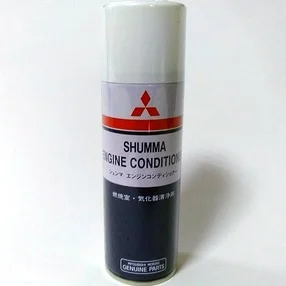
Mitsubishi Shumma Engine Conditioner is a Japanese engine de-coking agent, considered #1 by the majority of both professional mechanics and experienced drivers. Mitsubishi Shumma is a petroleum-based solvent, consisting of 20% ethylene glycol and mono-ethyl ether; it smells of ammonia and represents a heavy-duty de-coking method. This cleaner is an active foam, developed for cleaning GDI engines (direct injection), but in reality, it removes carbon in any engine. It is introduced into the cylinders via a tube. It is left for 30 minutes, but according to recommendations, it is most effective when left for 3 to 5 hours. It is not aggressive towards valve stem seals.
One can is enough only for de-coking an engine with a volume of 1.5 litres. The de-coking agent copes with deposits on pistons, rings, valves, and the combustion chamber. It can be applied not only without disassembling the engine; disassembled piston group parts can also be soaked in it to remove sludge. The price for Shumma is quite high for a standard 220 ml can. In many regions, it can be quite difficult to buy. But such demand is fully justified. And if its application yields no results, one can confidently say that only a repair will help. Order code — MZ100139EX.
Reviews
- There was significant oil consumption, but after leaving the agent in the piston group for 2 hours, the situation improved significantly. By the way, some write that you don't need to change the oil; I advise changing it anyway because more than half of the fluid went into the sump during de-coking.
- I learned about Shumma de-coking from a video where tests were conducted on removing carbon from a valve. Decided to test it on my car; the rings were stuck. I decided to clean the EGR at the same time. The agent handled the task brilliantly, though perhaps it wasn't that bad in there.
- On my Mitsubishi Lancer, I had to top up oil once a week. On recommendation, I decided to use the original engine cleaner. After cleaning, I tried to start the engine for about five minutes. There was a lot of smoke and sludge. As a result, the car drove a bit more briskly, and after 500 km, the dipstick level only dropped by 2 mm.
- There was heavy knocking; knowledgeable people suggested the valves were carboned up. I bought Shumma, removed the intake, and sprayed it on the intake valves and into the cylinders. After 30 minutes of inspection, I saw they had indeed become clean. After the procedure, the engine stopped shaking, and the idling stabilised. I want to warn you that a couple of drops got onto the headlight and bodywork, leaving marks; I think only polishing will fix it.
- Pros:
- Fast and high-quality de-coking of both rings and valves;
- Can clean carbon on pistons, throttle bodies, and EGR;
- Used both without opening the engine and for soaking disassembled parts.
- Cons:
- Very expensive;
- Although it doesn't eat the paint in the sump, it leaves a cloudy mark if it gets on a plastic headlight or bodywork.
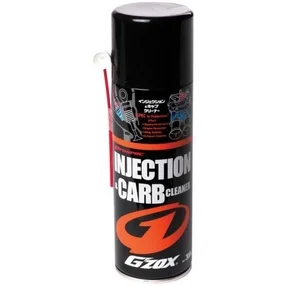
The cleaning effect is almost identical to the beloved Shumma, but three times cheaper. So it can be called the best popular remedy for engine de-coking.
GZox Injection & carb cleaner is a chemical agent developed by the Japanese firm Soft99. As the name suggests, it is intended for cleaning injectors and carburettors, but it has proven itself well in engine de-coking too. The instructions do not contain data on how to remove carbon on pistons, but don't let this scare you; apply it like other cleaning fluids poured into the combustion chamber.
The composition includes a petroleum solvent and ethylene glycol. It creates an oily film on the surface, so despite resembling agents from the heavy-duty de-coking section, its action is much softer. It is recommended for use as a preventative measure every 10,000 km.
A 300 ml can is sufficient for most cars with a 1.5 – 1.8 litre engine, and is also enough for a V6 engine. Test results showed that GZox excellently cleans carbon from the piston and is capable of freeing up small rings. However, it was unable to open piston oil holes cemented with coke. Although the composition is almost identical to the leading product, it still loses out slightly in effectiveness. It is more readily available for sale than Shumma. Order code for GZox — 1110103110.
Reviews
- Managed to achieve a result of reducing oil consumption from 1 litre per thousand to a reasonable 100-200 ml. But since GZox de-coking isn't the direct purpose of the agent, the main thing is to follow the sequence: spray into each cylinder for 5 sec; for the first hour move the shaft every 15 mins; after 1 hour add the remaining amount; leave the composition for 4-5 hours.
- It was hard to find in stock, but the effort was worth it. It cleaned the pistons almost perfectly. Oil consumption decreased by 4 times. After 15,000 km I want to repeat it.
- I have experience using GZox de-coking on several types of engines (VAG included) = positive result in all cases (levelling compression, reducing oil burning, improving traction and consumption parameters).
- Superbly removes carbon deposits, resins, and other contaminants. But note that GZox contains ammonia, which "eats" Aluminium. It does not corrode Cast Iron/Steel.
- Pros:
- Used for cleaning carburettors, throttle bodies, injectors, and de-coking rings;
- Gentle effect on the piston group;
- Enough for de-coking a six-cylinder engine.
- Cons:
- Does not de-coke oil channels;
- Due to its popularity and effectiveness, the price in some shops can be inflated.
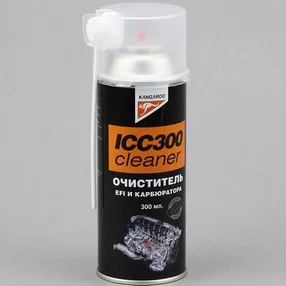
The best affordable agent. An analogue to GZox, costs less, but loses out slightly in effectiveness.
Kangaroo ICC300 EFI and carburettor cleaner is made in Korea. Like the previous GZox sample, it is not specifically an agent for de-coking, but nevertheless copes wonderfully with such a task. However, you won't be able to open oil channels with this fluid. An excellent option for eliminating carbon build-up after a car has been standing for a long time when the rings get stuck.
There are opinions that Kangaroo has a similar composition to top agents because it also smells of ammonia, but this is not the case. ICC300 cleaner is water-based and has good emulsification (solubility with oil); its composition includes: lauryldimethylamine oxide, 2-butoxyethanol, 3-methyl-3-methoxybutanol. It is poured exclusively into an engine warmed up to 70℃; about 12 hours are needed for a result.
It evaporates slowly and softens sludge well. As a result of penetrating the oil and running the engine briefly after de-coking, it has a beneficial effect on flushing the oil system. In fighting deposits of petrified varnish on pistons, it is slightly worse than GZox but the price is lower. Article number for ordering a 300 ml can — 355043.
Reviews
- Bought Kangaroo ICC 300 and decided to test it immediately. Staged a small trial — sprayed it on the carbon on the oil filler neck. Foam formed and everything flowed off. Now it shines like new, very surprised the action is so fast.
- Sprayed Kangaroo ICC300 directly into the removed intake. With the aim of cleaning injectors and valves. Let the liquid soak for about 10 minutes, then started slowly turning the crankshaft so the Kangaroo would penetrate the combustion chamber and waited another 20 mins. From the traces on the cloth, I saw that a lot of coke washed out, but didn't see any changes in engine operation.
- A slight knock appeared, but after I sprayed with Kangaroo cleaner everything stabilised.
- For 200 km after de-coking with Kangaroo ICC300, the engine began to run noticeably quieter, slightly livelier on acceleration and seems to go easier. But the oil consumption situation worsened after 2000 km.
- Pros:
- Cheaper than other good de-coking agents;
- One can is enough to clean the throttle body and carbon on pistons;
- Cleans the oil system well with the amount that seeps past the rings.
- Cons:
- Weak effect at room temperature.
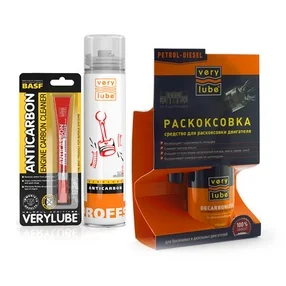
VeryLube De-coking (XADO) anticarbon belongs to the chemical method of removing burnt oil deposits. This aerosol is designed to quickly clean cylinders, pistons, and combustion chambers from all types of contamination (carbon, coke, varnishes, resins), and also to restore mobility to rings in petrol and diesel engines. But in reality, it barely copes with cleaning pistons, let alone oil channels. Xado's anticarbon is significantly worse than the previous ones, but if applied to a not heavily carboned engine, it is worthy of attention. At least in 7 out of 10 cases where there is a slight discrepancy in compression readings between cylinders, it helps. The first start after de-coking will be very difficult.
An interesting feature of VERYLUBE Anticarbon is that it can be used to flush the engine oil system. Therefore, the manufacturer claims that after application, it does not require an engine oil change. The consequences of such a procedure have not been studied. So, considering the thinning of the oil, it is still better to change it as in other cases of applying the heavy-duty method.
The composition includes detergent-dispersant components and aliphatic hydrocarbons. Although safe for rubber components, the manufacturer still recommends avoiding contact with paintwork.
One 250 ml can is enough for cleaning a 4-cylinder engine; the article number for this agent is XВ30033. As real tests have shown, this product performs poorly. But there are also other packages on sale with better action, which, by the way, are positioned not as engine de-coking but as piston ring de-coking. Anticarbon fluid 320 ml is calculated for 20 cylinders, but in reality, max for 8-10. Order code — XB40011, and a blister pack of 10 ml (dosage for one cylinder) — XB40151.
Reviews
- The engine was "eating" a lot of oil, which indicates obvious ring sticking. BUT the application of VeryLube de-coker from Xado gave no positive effect.
- Did piston ring de-coking with Verylube Anticarbon spray according to instructions. As a result, on the first start, there was enough smoke for the whole courtyard, with strange flakes from the exhaust at high revs. The engine started working more stably (small dips and choking disappeared).
- Did de-coking for prevention. Engine 3.5L V6, oil consumption was 300-500g per 5000km. I knew about foam agents like Shumma or Gzox, but they are more expensive and harder to buy, so I used VeryLube Anticarbon; the agent is not the most effective, but it works and is cheap. The de-coking procedure needs to be repeated several times. I did it twice, poured the agent for 30 minutes, 1 can was enough. Pleased with the result, compression almost leveled out.
- Pros:
- There is a choice of required volume;
- Used for cleaning pistons when opening the engine;
- Can immediately flush the engine oil system.
- Cons:
- Weakly effective with heavy carbonisation;
- Procedure needs to be repeated several times in a row.
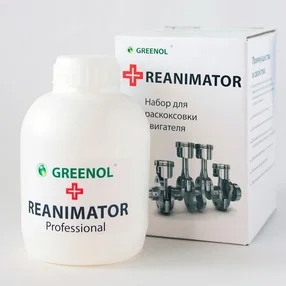
Greenol Reanimator De-coking professional quickly but not safely removes carbon, washes the piston, restores ring mobility, and is capable of softening deposits in oil drainage channels. This product for removing carbon and varnish deposits does not meet international environmental safety standards.
Greenol de-coking is effective but aggressive. The chemical composition contains powerful solvents, namely: selective organic, refined petroleum distillates, functional additives. Owners of cars with painted internal sumps should refrain from using it. It also has a detrimental effect on valve stem seals (rubbers simply swell to double size, but fortunately can recover overnight).
Greenol will be sufficient to flush most engines, including V6s, as its bottle volume is 450 ml, which is much more than most de-cokers on the market. It handles medium carbonisation with a B-minus. To achieve maximum effect, not only must you de-coke on a warm engine, but also pour in 50-80 ml at once (or as much as fits), and top up during the process of evaporation and seepage.
Reviews
- Before flushing, the engine was misfiring and fouling one plug with oil. Spent about an hour and a half on the procedure. Now it runs smoothly.
- The smell of burnt chemicals lingered in the cabin for a week. Must have been burning off, but that's a trifle.
- The car stopped smoking. Stopped eating oil much less. Compression rose and levelled out, runs smoother, haven't found any cons yet. Thinking of de-coking again.
- After the first 1,000 km run following Greenol de-coking, the oil level is still at maximum. Before this, consumption was 300 grams.
- Very powerful, had a bitter experience with paint peeling and clogging the oil pickup strainer :( Need to handle with care!
- Pros:
- Large volume enough for de-coking a 3.5-litre engine;
- Good when using on separate parts (valves, cylinders).
- Cons:
- Corrodes paint;
- Aggressive towards rubber parts.
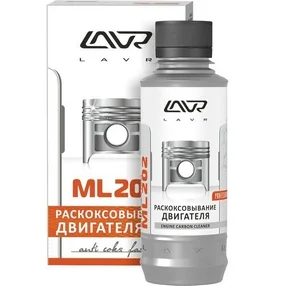
LAVR ML-202 De-coking is a widely promoted fluid for removing carbon from pistons, grooves, and rings without disassembling the engine. But as real results show, its action is on the level of acetone with paraffin (kerosene) — very mediocre. Although it creates a much more aggressive environment.
The Lavr ML202 Anti Coks Fast product belongs to the heavy-duty de-coking method. It represents a complex of surfactants and directed solvents of various chemical natures. Created to affect resin-coke and carbon deposits. In the course of repeated tests, practice has shown that carbon remains after Lavr. And the piston can only be fully cleaned mechanically. So, unfortunately, it does not possess all the properties claimed by the manufacturer.
De-coking with LAVR mandatorily requires an oil change, so it is recommended to use it before scheduled maintenance. The attached instructions for Lavr stipulate pouring 45 ml into cylinders for literally 30-60 minutes, but such a short period is maintained exclusively for express cleaning with regular use. But when the case is neglected, and significant symptoms of piston and ring carbonisation have appeared, at least 12 hours are needed. Maximum fluid stay in the cylinder is no more than 24 hours. Without disassembly, it washes carbon well in the chamber and on the working surfaces of pistons. Although this is not the main task of application. The most important thing is to de-coke the oil scraper rings. The amount of fluid is calculated for de-coking an engine with a volume slightly above 2.0 litres. Article for ordering 185 ml — LN2502.
Reviews
- After advice on the effectiveness of Lavr ML-202 de-coking on a forum, decided to test it myself on a Skoda with a TSI engine. Oil burning was nearly a litre per thousand. The engine started running quieter, but the reduction in oil consumption was short-lived.
- Car has done 150k. Poured it into the cylinders and left all this gloop for 10 hours, as a result, there was almost no effect. The residues sucked out with a syringe browned slightly, and there was little sludge on the cloth laid over when cranking. The car really didn't want to start, and compression only dropped from 15 to 14 (with the required 12 kgf/cm2). Didn't check with an endoscope inside, but shining a torch, I saw the pistons hadn't cleaned much.
- De-coked with Lavr before a rebuild; in principle, the opening showed that the agent works.
- Tried LAVR on a Honda. Used according to instructions, left to soak overnight. After de-coking, first attempts to start the engine were unsuccessful. After starting, white smoke poured from the exhaust pipe. Plus a characteristic stench. After changing the oil, drove for 20 minutes at a speed of 120 km/h. As a result, traction improved, starting the engine became easier.
- Pros:
- No need to search for instructions for use; they come in the kit along with a syringe and tube.
- Cons:
- Exclusively preventative, therefore not effective for stuck rings and oil consumption.
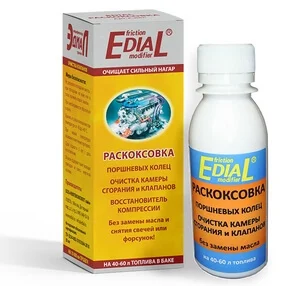
EDIAL De-coking is a fuel additive, which makes it a "soft" cleaning method. Therefore, an oil change can be skipped, but it is still recommended to change the spark plugs. The agent is designed to remove carbon from combustion chamber parts.
Edial de-coking agent does not contain alkalis, acids, or solvents. Unlike fluids poured directly into cylinders, it is capable of not only removing coke from pistons and rings but also cleaning deposits from valves, their seats, and spark plugs. The preparation contains active reagents and surfactants possessing immense penetrating power. But unfortunately, this still doesn't help it clean varnish deposits from rings and oil channels.
One 50 ml bottle is calculated for 40-60 litres of fuel. Moreover, this can be either petrol or diesel. Edial de-coking is equally effective for these two types of engines. According to the manufacturer's claimed characteristics, it creates active protection in the form of a thin film on the surface of piston group parts, which prevents the appearance of carbon. Activation of detergent additives occurs in motion above 60 km/h.
Reviews
- Decided to check EDIAL. Poured half a bottle into the tank for 20 L and drove. "Miracles" began to happen after 100-150 km in the city. The car became more dynamic.
- Filled up and drove to the countryside. Generally observed there was less smoke, whereas before it smoked like a steam train. Fuel consumption also dropped. Mileage 140k km.
- Lots of ads and noise about this "ideal" agent for de-coking. It's a regular additive, of which there are many from other firms: STP, LIQUI MOLY, etc. In reality, it can only remove carbon on valves and only if applied regularly, but if there's already a layer, it's too late...
- Pros:
- No oil change required after application;
- Cleaning happens whilst driving;
- No need to follow special instructions.
- Cons:
- Exclusively preventative, does not allow freeing up rings if they are stuck;
- Need at least half a tank of fuel to pour the agent proportionally and burn it off.
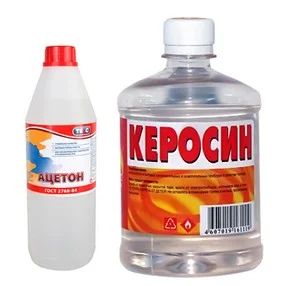
De-coking with acetone and paraffin (kerosene) is an old-school working method that worked well enough on older engines with simpler tolerances. But progress doesn't stand still. The mixture of paraffin and acetone is often improved with oil or other chemicals. Like Lavr de-coking, it has a "hard" cleaning character against coke and varnish formations. To prepare the fluid, assume that about 150 ml is required per cylinder. Like other agents of this group, it should be poured into the combustion chamber of a hot engine; a small amount of oil will improve the effect, preventing it from evaporating quickly. It allows reducing oil consumption, improving dynamics, and getting rid of detonation caused by incomplete combustion of the fuel mixture.
Changing the oil is mandatory, as Paraffin and acetone are aggressive towards oil, so after the procedure, it is mandatory to change the lubricant. During the first start and revving, while the remains of the mixture and carbon are being burned off, it is better to put in old spark plugs so as not to ruin newer ones.
De-coking with paraffin + acetone "cures" sticking piston rings due to carbon or after a long period of the car being immobile. Also, piston group parts are left to soak in such a liquid when cleaning deposits during an engine overhaul. Since a lot of cleaning agent is required, and the price of commercial de-coking is not low, preparing a fluid with de-coking properties is one of the best ways to save money.
To make a de-coking mix from acetone and paraffin, you need 250 ml of each solvent, and then add engine oil. Mixing ratio 50:50:25.
Reviews
- Bought a car with high oil consumption, wanted to start a rebuild, but decided to do the old-school de-coking first: acetone and paraffin 50/50. Poured about 50 grams into each cylinder (under the plugs) for 2-3 minutes, then another 50 grams and turned the engine by the pulley (or wheel) in 5th gear, then poured more for the night. Started it up, opened the air filter, there's not only no soot like before with large oil drops flying out, but not even vapour from the breather. If anyone wants to try this method, I remind you that you need to change the oil, as paraffin with acetone will partially go into it and it may soon curdle!
- After de-coking with acetone and paraffin, for the first 5 km the engine sometimes sneezed and jerked, but hitting the motorway, it found a "second youth". Started working smoothly, responds briskly to the accelerator pedal and noticeably gained power. I want to note that you should definitely add oil to this mixture. It allows this "mix" to be held better against leaking into the sump, and reduces acetone evaporation.
- On an Audi A4 2.0 ALT with 225k km mileage, there was terrible oil burning — 2 litres per 1k km. After such cleaning, I've already driven 350 km and not a gram of oil has gone, everything is level. The car doesn't smoke, and the burning smell is gone. Happy so far.
- Did it the old-school way — paraffin with acetone and oil in equal proportions. As a result, compression became an order of magnitude better, and oil consumption immediately decreased.
- With mileage over 300,000 km. The result exceeded expectations — oil consumption dropped to 100 g per 1000 km. Poured 50% oil, 25% paraffin, 25% acetone.
- Pros:
- Budget-friendly makeshift mix found in every garage;
- Can be used for mechanical cleaning without worrying about consumption.
- Cons:
- Limited properties.
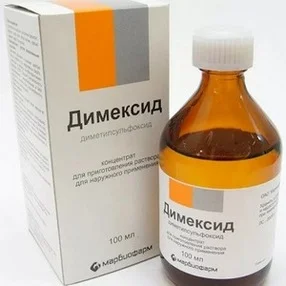
De-coking with Dimexidum (DMSO) must be performed with extreme caution, as it is a potent synthetic pharmaceutical preparation. Dimethyl sulfoxide (Dimexidum) SO(CH3)2 — is a sulphur-containing organic compound. A very hygroscopic liquid with a weak specific smell. It turns into ice when the outside temperature drops below 10 degrees Celsius.
This preparation works only when it is warm or hot. Therefore, if individual parts are cleaned by soaking, the container is placed in a warm place; if this acid is poured into cylinders, it is exclusively into a hot engine, and when it cools down, it is pumped out. But not all engines can be de-coked with Dimexidum. This preparation is capable of corroding paint in a sump painted on the inside, but is inert to aluminium. After the procedure, it is mandatory to not only change the oil but also flush the engine with flushing oil.
With risk, dimethyl sulfoxide can also be poured directly into the oil like a BG additive. Exclusively when hot and oil viscosity not lower than 5w40 in a proportion of 5-10% of the total oil system volume. And then let the engine run for half an hour at idle or no more than 2000 rpm. It does not mix with engine oil unlike ethanol, acetone, or castor oil. So there is a danger of thinning and oil starvation.
Because de-coking with Dimexidum is quite dangerous both for the engine and causes irritation to human skin, people try to work in rubber gloves, using it to soak an already removed piston. To fight carbon and deposits, about five 100 ml bottles of dimethyl sulfoxide will be required. It can be bought in any pharmacy.
Reviews
- Observed slight oil burning. Filled the chambers completely almost to the neck. After half an hour of de-coking on a hot engine (mixture of dimexidum, solvent, and acetone) everything went smoothly. The engine stopped eating oil.
- Pouring Dimexidum on a removed piston at room temperature is fruitless. But if you pour it and put it near a heater, wrapped up so it doesn't evaporate — it will be effective, but not enough to refuse special chemicals, because to achieve the desired result you will have to dismantle the pistons, although many pour it straight into the cylinders. But I didn't, as it is very aggressive!
- Learned about Dimexidum and its ability to dissolve coke accidentally on some website. Decided to check what kind of beast it is, because I was immediately disappointed in the cleaning abilities of all sorts of flushes, but when I heated it, it dissolved all the coke.
- Dimexidum will stink from the exhaust for a long time; I've done more than 500 km after de-coking and it smells like dead cats, but it works, the engine stopped eating oil.
- Pros:
- Cheap pharmaceutical product;
- Dissolves absolutely all coke on pistons;
- Can also be used to flush the oil system.
- Cons:
- Starts to crystallise (freeze) at positive temperatures;
- After application directly in the combustion chamber, exhaust gases will have a terrible smell for a long time;
- The preparation is aggressive to paint.
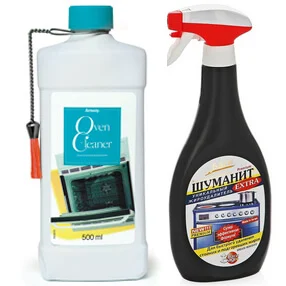
De-coking with oven cleaner, as many car owners have discovered, also copes very well not only with household burnt-on food but also with deposits on piston group parts and the cylinder head. But there are many nuances in its application.
First — this will not be so much de-coking as specifically cleaning, because it is not poured into the cylinders, but used to treat the pistons themselves or other engine surfaces with heavy carbon deposits directly. Second — all cleaners for cookers and ovens contain alkali (caustic soda or sodium hydroxide), which can damage the protective oxide film. In this case, aluminium becomes vulnerable to oxidation when interacting with water. On pistons, this effect is shown by them turning dark. Therefore, keeping such a composition on for longer than 5 minutes is categorically not recommended! Third — it is aggressive not only to aluminium and coke on the piston but also to human skin, so you must process it wearing rubber gloves.
De-coking tests have shown that the most effective and best agents for such a procedure are: American Amway Oven Cleaner and Israeli Shumanit. The composition of these agents includes: Surfactants, solvents, sodium hydroxide.
Consumption for removing carbon from each piston is very small, and often the agent is rubbed in with a stiff brush. Unfortunately, it is very difficult to penetrate the grooves, so a small amount of coke may still remain under the rings. Such products are found in every kitchen, so the price of de-coking with oven cleaner will be pennies. And if not, you can buy it in any hardware store.
Reviews
- Washed carbon off pistons (removed from engine) with "Shumanit" stove cleaner. Result is amazing... Washed everything to a shine. True, you need to be careful not to leave the solution on aluminium for more than 10 seconds, and it shouldn't get on hands — very potent mixture. Didn't use any brushes... Just sprayed the agent, let it soak for 5-6 seconds and then wiped with a cloth. Spent about 15-20 minutes on each piston.
- De-coked rings first with "Titan", zero effect, and then took the stove, oven and microwave cleaner "Flat" from the kitchen — and was stunned. The liquid immediately turned dark. Small pieces of carbon began to float in it. Took a toothpick and agitated the ring a little. Almost everything that was on it fell off. Took it out, wiped the remains of Flat and carbon with a cloth — the ring is clean and shiny. Took about 3 minutes for everything.
- Cleaned pistons with this stuff for cookers... Called "Sana", All carbon was removed, but the pistons quickly darkened and became kind of slightly rough.
- Folks encountered a problem with carbon on the piston group, basically, BBQ grill cleaner helps very well, one bottle is quite enough for 4 pistons.
- Found some rubbish for gas cookers... poured on the piston and poured hot water... Went to the room to get dressed, get ready for work... came back went to pour tea and stared at the jar with the piston... The liquid inside became TERRIBLY BLACK... Pulled out the piston and OH GOD It's CLEAN... I was just shocked. Only it didn't come off well in some places: in piston ring grooves and oil grooves...
- Pros:
- Costs less than any de-coking agent;
- Can be used not only for cleaning pistons but also the cylinder head.
- Cons:
- Exclusively on a disassembled engine;
- All cleaners for cookers, ovens, and BBQs are aggressive to aluminium;
- Cleans poorly in piston ring grooves and oil grooves.
All those de-coking agents, whether for petrol or diesel engines, about which the manufacturer claims that they do not affect the oil and do not require changing it after application, are merely marketing slogans.
It is worth noting that all agents designed to be poured directly into the combustion chamber have the same de-coking principle. They may differ only in the soaking time inside. Some de-coking manufacturers recommend keeping the agent for no more than 2-3 hours, as it works exclusively when hot. And also periodically make a small movement of the crankshaft (±15°), this will facilitate better penetration of the fluid under the piston rings and their loosening. Otherwise, all compositions are poured into a warmed-up, but not overly hot engine, and after some time the residues are pumped out, cylinders are blown out or the crankshaft is turned (with five-second starter bursts).
For the best effect, professionals recommend de-coking the car engine in two stages: first use an oil system flush like BG 109 (let it run for 20 minutes at working revs and 40 at idle) — it gets the rings moving well and cleans oil channels, and then the removal agent itself. Using de-coking fluid only for the oil system or fuel system without using one poured into the combustion chamber makes no sense. In cases where high oil consumption was observed, besides these two stages, a third one should also be performed — eliminate the cause of the "oil burning" (often replacing valve stem seals).
In summary...
De-coking should be carried out every 20,000 km. The main indicator is the compression variance across cylinders. That is, so that stuck rings do not become the reason for a massive repair, you need to do preventative maintenance and look after the internal cavity of the engine, just as you look after the health of your teeth. Because if you pour chemicals into cylinders when things are already really bad there, you might only do harm. There is a possibility that after de-coking the car won't start at all. This often happens when heavily worn rings with a large amount of carbon are stuck.
Was this article useful?
Your feedback helps us improve our content.
Related Materials

Discussion (0)
No comments yet!