How to clean the throttle body

The task of the throttle body (hereinafter TB) is to regulate the amount of air supplied to the intake manifold. Its position is regulated in accordance with the position of the accelerator pedal. The valve drive can be mechanical (using a cable) or electronic (using an electric motor). The position of the TB is monitored by a special sensor. It transmits the relevant information to the ECU, which in turn makes a decision on the amount of fuel supplied and changing the engine operating mode. You can read more about its device and functions in the additional material on our website.
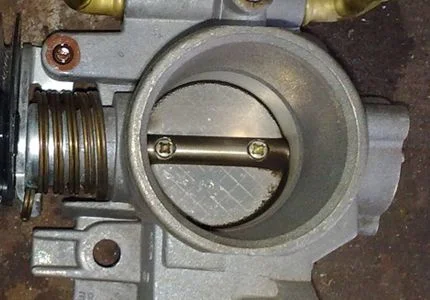
Signs of throttle body contamination
To avoid confusing symptoms indicating excessive carbon buildup on the valve, it is better to visually inspect it first. If there are no visible oil or coked deposits on the walls of the throttle assembly, then, most likely, cleaning the throttle body will not solve your problem.
The symptoms themselves look like this:
- problematic engine starting;
- rough engine operation;
- hunting idle (fluctuating RPM);
- hanging RPM;
- RPM drops leading to a complete stall.
Mistakes when cleaning the throttle body
Many inexperienced car owners may clean the throttle assembly incorrectly, at the very least risking not getting the desired effect, and at most — damaging the TB and causing it to fail. Therefore, it is important to understand when to perform the procedure, how to do it, and what products to use.
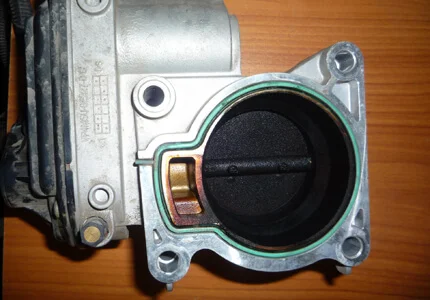
Dirty throttle body
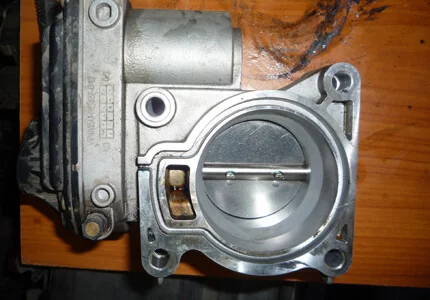
Clean throttle body
To clean the throttle body correctly, you SHOULD NOT:
- Clean the valve in any uncertain situation without diagnosis.
- Clean the valve without removing it (the effectiveness of such cleaning is negligible, as it is often possible to remove carbon deposits only on the valve itself, while the inner walls and air channels remain dirty).
- Use excessive force when cleaning with a cloth, which can lead to damage to the valve itself or the nearby TPS (Throttle Position Sensor).
- Use stiff brushes instead of soft materials. Such a mistake often leads to a loss of TB functionality, because on some throttle assemblies the inner wall and the valve are coated with molybdenum for even smoother airflow. This layer is often confused with dirt and removed. As a result, the valve starts to either "bite" or let in excess air (RPM increases).
- Forget to perform throttle body adaptation (relearning) after cleaning. Valves with an electronic accelerator pedal require proper TB teaching to set the idle speed to the required value.
The throttle body should be cleaned every 30,000–50,000 km. By adhering to all the above recommendations and taking into account the main mistakes made by inexperienced car owners, no more questions on how to clean the throttle body, whether mechanical or electronic, should arise. Cleaning requires a minimum of tools and expense, just: carburettor cleaner and a clean rag, as well as a screwdriver for dismantling the unit.
Cleaning algorithm
Now let's present a step-by-step algorithm for proper cleaning of the throttle body.
- First of all, you need to access the valve itself. The design varies in different engines. But as a rule, you need to remove the air duct that goes from the valve to the air filter.
- Dismantle the valve. Before disconnecting the electrical connectors, be sure to remove the negative terminal from the battery (especially important for electronic throttle pedals so as not to reset the ECU settings incorrectly). Unscrew the mounting bolts (2-4 pieces) and remove the assembly.
- For cleaning, you must use a special carburettor cleaner (Carb Cleaner) or throttle cleaner. Do not use non-specialised compounds like WD-40, as they leave a greasy film.
- Using a cloth and the mentioned agent, carefully wipe the valve inside and out.
- You also need to clean the protective mesh (if present in your vehicle).
- The assembly is reassembled in the reverse order. It is recommended to install a new throttle body gasket.
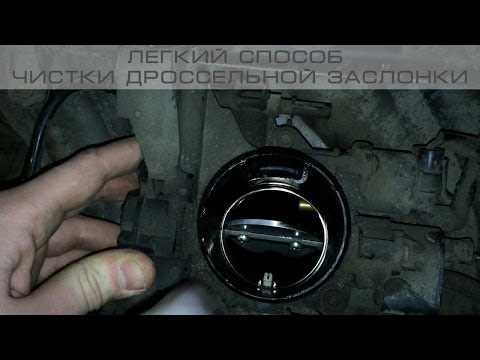
Easy way to clean the throttle body
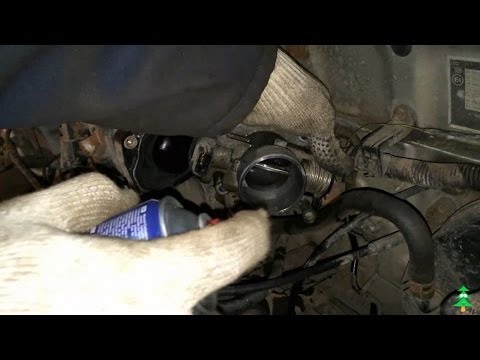
The correct way to clean the throttle body
Cleaning without removal
Many car owners are also interested in the question of how to clean the throttle body without removing it. Such methods do indeed exist, but immediately you need to understand that high-quality cleaning is possible only when dismantling the valve.
For this, you will need a special agent — an intake tract cleaner. The use of oily compositions (like WD-40) is unacceptable, as new dust will quickly adhere to the oil residues.
So, the procedure without removing the unit:
- As in the previous algorithm, remove the air duct to get to the valve.
- With the valve closed, spray the surface with cleaning fluid, and remove the loosened dirt with a cloth.
- Open the valve and remove dirt from the side surface.
- Try to ensure that the cleaning agent gets into all channels. The cleaning procedure with a cloth is similar.
We repeat once again that for high-quality cleaning, the throttle body must be removed from the car. And when installing it back, it is advisable to change the valve gasket to a new one. Fortunately, it is an inexpensive part.
It should also be remembered that in most cases, after cleaning the throttle body, it is necessary to perform actions to "teach" or adapt it. This procedure is carried out either using a computer (connecting it to the car's ECU), or through manipulations with the ignition and the accelerator pedal. In this case, it is impossible to give universal recommendations, since they can differ significantly for each manufacturer and even model. Keep this in mind!
Causes of contamination and how to deal with them
There are several reasons why the throttle body gets dirty over time. By avoiding their appearance, you will automatically extend the intervals between cleaning. The mentioned reasons include:
- Ingress of dust and dirt into the intake system. This can be caused by various reasons — a clogged air filter, use of a low-quality filter, damage to the integrity of the air duct, or leaks in the filter housing.
- Crankcase gases with oil mist. These are the main cause of oil deposits on the valve. They enter the intake through the crankcase ventilation system (PCV). The situation worsens on worn engines. Oil mist mixes with micro-particles of dirt from the air and settles on the walls and the valve axis.
Change the air filter on time and monitor the condition of the crankcase ventilation system. All this will save you from the need to clean the throttle body earlier than the scheduled time.
Which agent to use for cleaning the throttle body
There are a number of special products designed to clean the surface of the throttle body. Some DIY enthusiasts use WD-40, acetone, solvents, and other similar compounds for this. This is not recommended. WD-40 leaves a greasy film that attracts dirt, and aggressive solvents can damage rubber seals or the plastic of sensors. Today, auto shops sell a large number of special products for this procedure. They are all relatively affordable.
| Product Name | Description | Notes |
| LIQUI MOLY DrosselKlappen-Reiniger (LM-5111) | One of the best products for cleaning the throttle body. Effectively cleans dirt and oil deposits. | Aerosol, 400 ml volume in a can. |
| Mannol Carburetor Cleaner | Cleans oil and dirt from the valve well. A budget-friendly option. | Aerosol, 400 ml volume in a can. |
| ABRO Carb&Choke Cleaner (CC-220) | High-quality cleaner. Popular among car owners. | Aerosol, 220 ml volume in a can. |
Summary
If the malfunctions described above appear, check the condition of the throttle body. Cleaning it does not present great difficulties. If you clean it, the throttle response and engine stability will improve. Therefore, do not forget to carry out regular cleaning of the valve every 30,000...50,000 kilometres. As for cleaning agents, use only specialised automotive chemicals.
Was this article useful?
Your feedback helps us improve our content.
Related Materials

Discussion (0)
No comments yet!