Why the Car Starts and Immediately Stalls
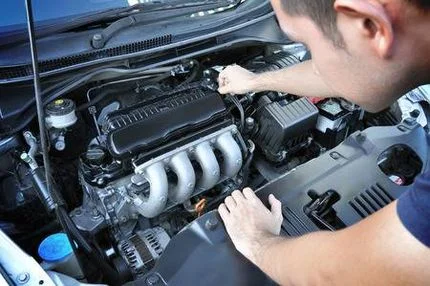
The situation where a car starts and stalls a couple of seconds after ignition is familiar to many drivers. It happens on cold starts or when the engine is hot, on petrol, diesel, and LPG engines. There are many causes: from poor quality fuel to electronic failures or mechanical issues. This symptom should not be ignored — it is often a sign of a fault that could lead to expensive repairs.
Main Causes of the Fault
Let's divide the possible causes into logical groups for easier diagnosis: from simple (fuel and air) to more complex (sensors and mechanics).
Fuel System and Air Supply
Low fuel. The most banal reason. During long parking periods, condensation and residual vapours settle at the bottom of the tank; there is enough for the motor to catch, but the pump immediately draws in air, and the engine cuts out.
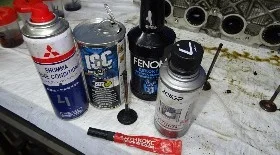
Poor quality fuel. Water in the tank or contaminated fuel leads to unstable operation. If there is only a small amount of water, special fuel system water removers can help. However, if frankly bad fuel has been put in, it must be drained, filters replaced, and quality fuel added.
For Diesels: In winter, paraffin wax in summer-grade diesel clogs the filter. Use anti-gel additives and check the glow plugs.
Blocked air filter. Leads to 'oxygen starvation'. The mixture becomes overly rich, the spark plugs get flooded, and the engine stalls. The solution is to check the air intake and replace the filter.
Insufficient fuel pressure. Critical for injection and diesel engines. Causes:
- Fuel pump failure.
- Clogged filters (the strainer in the tank or the inline fuel filter).
- Faulty Fuel Pressure Regulator (FPR).
- Leaks in the fuel lines (often accompanied by the smell of petrol).
Vacuum leak (Air leak). Excess air not accounted for by the sensors causes a lean mixture. Leaks should be sought in the intake manifold, vacuum hoses, throttle body gaskets, or carburettor base. Damaged hoses must be replaced, not repaired.
EVAP system fault (Fuel vapour recovery). If the canister purge valve is stuck open, unmetered air and fuel vapours constantly enter the intake manifold. This creates a vacuum leak effect, causing the car to stall immediately after starting or to run unstably.
Electronics, Sensors and Ignition
Alarm and Immobiliser. Often, the security system cuts power to the fuel pump or ignition a few seconds after starting (Anti-HiJack mode or signal loss). Ensure the immobiliser fob or key transponder is being read correctly.
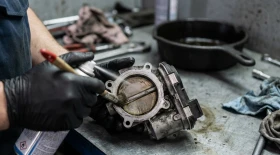
Idle Air Control Valve (IACV). On injection cars, this maintains engine speed when the accelerator pedal is not pressed. If the IACV is dirty or broken, the engine starts but stalls as soon as you release the throttle. Cleaning the channel and the regulator itself often helps.
Throttle Position Sensor (TPS). If the signal is incorrect, the ECU does not understand the engine's operating mode. The sensor needs to be checked with a multimeter.
Mass Air Flow Sensor (MAF). If it overestimates or underestimates air flow readings, the mixture is prepared incorrectly. With severe deviations, the engine stalls. The MAF sensor cannot be repaired — only replaced.
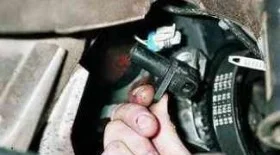
Crankshaft Position Sensor (CKP). One of the primary sensors. If the signal is lost, the spark and fuel injection cut out. If the sensor works intermittently, desynchronisation and engine stoppage can occur. The CKP requires testing.
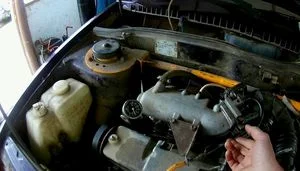
Ignition System. This includes:
- Spark plugs: Old, flooded, or with an incorrect gap.
- Ignition coils: Insulation breakdown causes misfiring and engine stoppage.
- HT leads (High Tension leads): Breakdown (arcing often visible in the dark) or oxidised contacts.
Mechanical Issues and Exhaust
Blocked Catalytic Converter. If the honeycomb structure of the catalytic converter has collapsed and sintered, exhaust gases cannot escape. The engine 'chokes' and stalls. You can check this by unscrewing the upstream oxygen sensor (creating a hole for gas escape) — if the engine runs more stably, the problem lies in the cat.
Important: If removing the catalytic converter, it is essential to install a flame arrester and remap the ECU (or install a lambda sensor spacer/emulator), otherwise the engine will continue to run in limp mode.
EGR Valve. Exhaust Gas Recirculation system. If the EGR valve is stuck open, exhaust gases constantly flow into the intake, choking the engine at idle and during start-up. Solution — clean the EGR valve or blank it off with a software delete.
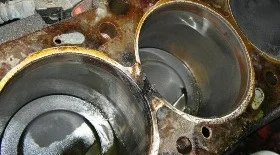
Timing Mechanism (Belt/Chain). Chain stretch or a belt jumping by 1-2 teeth disturbs valve timing. The mixture is injected at the wrong time, and the spark fires on the wrong stroke. This requires an urgent check of the timing marks, as it risks piston-to-valve contact.
Incorrect Valve Clearances. Relevant for engines without hydraulic lifters. Tight valves fail to close properly when heated, compression drops, and the engine stalls.
Specifics of Carburettor Vehicles
Older vehicles generally have their own specific problems:
- Incorrect carburettor adjustment: Idle speed too low, incorrect float chamber level.
- Choke mechanism: If the cold start device isn't working or the diaphragm is split, the flap doesn't close (lean mixture) or doesn't open slightly after starting (rich mixture, engine floods).
- Idle cut-off solenoid: If it doesn't click when the ignition is turned on, the idle jet is blocked.
Conclusion
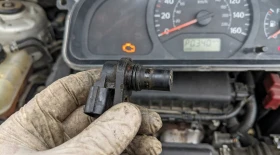
If the car starts and stalls, begin diagnostics with the simple things: immobiliser fob, fuel level, air leaks. If the Check Engine light is on, make sure to read the error codes with a scanner; this will save time and point to the faulty sensor.
Was this article useful?
Your feedback helps us improve our content.
Related Materials
Discussion (0)
No comments yet!