75W-90 Gear Oil: Description, Specifications, and Top Ratings

Oils designed for use in manual gearboxes, transfer cases, and drive axles are called transmission oils or gear oils. Transmission and engine oils share a similar classification system. For gear oils, the primary properties are viscosity characteristics, operational and anti-corrosion properties, as well as lubricating and thermal-oxidative stability.
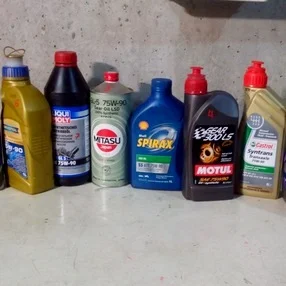
75W-90 Gear Oil Review
Gear oil, much like engine oil, has its own marking system which one must be able to interpret correctly. The oil label displays the SAE classification and API; some may also carry a ZF classifier or MIL specification, as well as specific manufacturer approvals.
All modern gear oils must comply with the international standard SAE J306 classification. 75W-90 is the most commonly used viscosity grade among transmission fluids.
Meaning of Viscosity Characteristics 75W and 90
According to SAE, gear oils are divided into types and, consequently, their intended use based on viscosity. Since we are discussing 75W-90 gear oil, let's first clarify its characteristics.
75W – This indicator is known as the "winter" rating; it indicates the degree of fluidity at negative temperatures. The lower the value before the letter "W", the more fluid the gear oil is in freezing conditions. For this type of oil, the threshold should be at -40 °C.
The second indicator of the viscosity range is 90. Often called the "summer" rating, it indicates the maximum ambient temperature tolerance while maintaining viscosity at 100 degrees Celsius. The parameter itself does not reflect a direct temperature value, but according to reference data, this threshold is up to +35 °C ambient air temperature.
It might seem logical to ask: why is 75W-90 oil the most suitable for our climate, and why not create a universal oil with an even wider temperature spectrum? It is not that simple. Protection against friction between gear surfaces depends directly on the lubricating ability of the gear oil. Although this indicator improves significantly with increased viscosity, the law of resistance comes into effect: transmission power losses increase due to the energy spent squeezing the thick oil out from under the gear teeth. Furthermore, viscous oil thickens heavily in frost. Less viscous oil performs well at minus temperatures but has a less durable protective film and poorer lubricating properties. To balance these two indicators, special additive packages are used.
Transmission fluid must perform the following functions:
- Eliminate friction, jamming, scuffing, pitting (deep metal corrosion), and other damage;
- Reduce energy loss and increase efficiency;
- Dissipate heat from friction surfaces;
- Reduce noise and vibration during gear operation.
Therefore, 75W-90 gear oils from different manufacturers naturally differ somewhat in their properties. Additionally, 75W-90 gear oil is often synthetic, although in some cases, manufacturers may label it as semi-synthetic. In reality, it differs from full synthetics only by a synthetic substance content of 20% – 40% and an additive quantity of 2 to 15%.
Besides classifying these fluids by the SAE system, there is a division of gear oils by the API system with the index "GL".
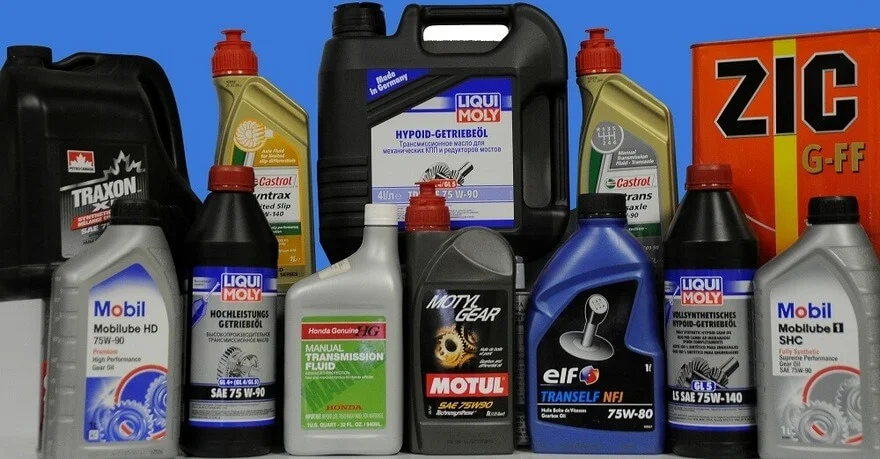
Operational Properties of Gear Oils
The API classification provides a comprehensive assessment of the gear oil depending on operational properties and is divided into six categories. Categories are marked with an index, which helps understand the scope of application and the quality level of the product. In passenger car transmissions today, fluids from only two groups are used – GL-4 and GL-5.
GL-4 – Designed for medium-load gears. It is used in manual gearboxes and mechanisms with spiral-bevel gears. Such oils can be operated in hypoid-type transmission gears at significant speeds but low to moderate torques.
GL-5 – Applied for heavily loaded gears. Oil of this standard is used in hypoid gears operating at low torques combined with high speeds, subject to short-term shock loads. Such oil contains a large amount of sulphur-phosphorus extreme pressure additives.
Also very common is 75W-90 oil marked GL-4/5; the presence of two indices indicates application in various load conditions and different types of mechanisms.
MIL Specification
In addition to API classification, the US military specification MIL is often used. For 75W-90, this is MIL-L 2105 A, B, or C. It confirms compliance with technical conditions for all-season gear oils, analogous to API GL-4 or GL-5.
ZF Gear Oil Quality Classifier
You may also see a ZF classifier on a 75W-90 oil canister. This is a classification system for all types of automotive transmissions. Designation is made by letters and numbers from ZF TE-ML 01 to ZF TE-ML 14.
What is the difference between GL-4 and GL-5 75W-90 oils?
As mentioned above, the purpose of GL-4 oils is for operation in transmissions with bevel and hypoid gear types, working at contact stresses up to 3000 MPa and oil temperatures up to 150 °C. Generally, these are the gearboxes of front-wheel-drive cars. API GL-5 ensures reliable operation of hypoid gears working with shock loads at stresses above 3000 MPa. It is used in gearboxes with hypoid bevel gears and for the final drive with a cardan shaft in drive axles (with Limited Slip Differentials, LSD). Such transmission fluid provides better protection under high load and pressure conditions.

Mistakes when choosing 75W-90 oil and the difference between GL-4 and GL-5.
A key feature is that 75W-90 API GL-4 oils contain half the amount of sulphur-phosphorus additives compared to the higher class. These additives create a special protective coating on parts to prevent wear; however, this substance is stronger than the surface of parts made of copper or other soft alloys. Therefore, using gear oil for the wrong purpose threatens the wear of elements made of soft metal. Consequently, in gearboxes where 75W-90 GL-4 should be used, but GL-5 is poured in, rapid appearance of brass shavings is observed because the synchronisers are made of copper alloys, and the sulphur-phosphorus additive corrodes them.
Rating of the Best 75W-90 Viscosity Gear Oils
To build a rating of the best oils, one must focus on the following indicators:
- Viscosity. The oil must maintain optimal viscosity at low temperatures and retain its binding properties at high temperatures;
- Temperature characteristics. Each fluid has its own pour point and flash point; a good gear oil should have the widest gap between these figures;
- Critical load. The higher this figure, the higher the quality of the product;
- Scuffing index. Unfortunately, there are no standard norms for this index, but the higher the value, the better the oil;
- Weld load. According to standards, this value should not be lower than 3,000 N;
- Wear indicator. This criterion is determined only for GL-5 class oil; it should be less than 0.4 mm.
The TOP list of the best gear oils does not consider their cost but is based on reviews and comparative tests.
According to many parameters, Motul Gear 300 75W-90 gear oil takes first place among all tested products. This fluid has the highest indicators for protection against scuffing (index is 60.1) and welding, stability of the oil film without loss of engine power, and an average wear indicator (0.75 mm). However, it cannot boast exceptional viscosity characteristics (especially at negative temperatures).

Temperature test of 75W-90 gear oils
Second and third places are occupied by transmission fluids from Castrol (Syntrans) and Mobil (Mobilube). Castrol Syntrans Transaxle 75W-90 GL-4 oil is used in gearboxes, transfer cases, and drive axles. It has good low-temperature fluidity, but compared to Mobil, the scuffing index is quite high for a fluid of this class, though the wear level is even better than that of Motul (59.4).
Mobil Mobilube can be placed in third position as it has decent test results for protection level and wear under high loads, thus ensuring low friction losses at operating temperatures. However, unfortunately, it has an insufficient viscosity index at sub-zero temperatures.
The fourth result in the gear oil testing was shown by Total Transmission SYN FE 75W-90. Reviews of this fluid are also decent, although, as it is universal (holding API GL-4/GL-5), it will not be suitable for all gearboxes. This oil has a scuffing level of 58.8, which is even better than the leader of the 75W-90 gear oil rating. However, it cannot boast a great wear level or good viscosity in the low-temperature test.
Semi-synthetic gear oil LIQUI MOLY Hypoid-Getriebeoil TDL 75W-90 GL-4/5 also performs well in tests, particularly standing out in the minus 40-degree test; its fluidity at such low temperatures will allow the gearbox and differentials to work without problems. At the same time, other important indicators are at an average level.
We have not included the synthetic oil ZIC G-F TOP 75W-90 in this rating due to very limited data on its wear and scuffing indicators, although it passes the temperature test with flying colours. This gear oil can be used in manual gearboxes (including synchronized transmissions) and drive axles. According to car owners' reviews, it significantly reduces transmission noise, withstands extreme loads, and has virtually no drawbacks.
Attention must also be paid to Transyn 75W-90 API GL 3/4/5 oil from the manufacturer Eurol. Despite the lack of real temperature tests and a very high wear level (0.94), it has a decent scuffing level of 58.5 and great popularity among motoring enthusiasts.
As you can see, the range of 75W-90 gear oils on the market is quite large, and there is always something to choose from for your needs. But remember, you should choose not because a neighbour suggested it, but based on the requirements of your car's transmission and the characteristics of the transmission fluid itself.
Was this article useful?
Your feedback helps us improve our content.




Discussion (0)
No comments yet!