How to bleed brakes with ABS

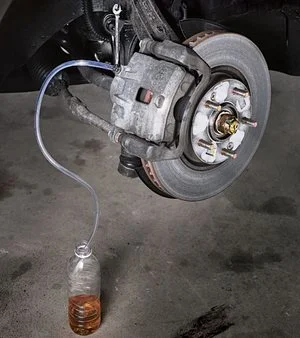
Bleeding brakes with ABS has its nuances. To remove air correctly, you must know exactly which type of system is installed. In most modern cars, the ABS is merely a valve module — such systems are bled using the standard conventional method (pumping the pedal).
However, there are integral systems (with a high-pressure hydraulic accumulator) that require a specific approach. This guide describes the process specifically for systems with a built-in electric pump and hydraulic accumulator (e.g., Teves Mk2 and similar).
Types of ABS systems
- Standard ABS: A hydraulic module connected by pipes to the master cylinder. Bled like ordinary brakes.
- Integral ABS: The hydraulic valve block, accumulator, and pump are combined into one unit (or work in tandem to create pressure). Bled according to the scheme described below.
- Complex systems (SBC, etc.): The pump, accumulator, and control units are separated; includes ESP/EDS. Can only be bled at a workshop using a diagnostic scanner.
Preparation: Depressurising
In systems with a hydraulic accumulator, pressure can reach 180 bar. It must be released before any work is carried out.
- Switch off the ignition (key in position 0).
- Press the brake pedal about 20–30 times until it feels solid (hard). This discharges the pressure accumulator.
- Disconnect the level sensor connectors on the brake fluid reservoir.
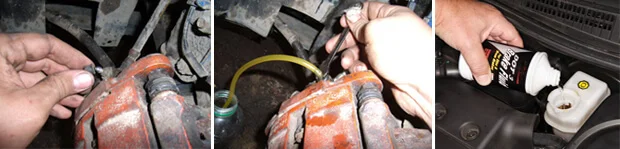
Bleeding procedure (for integral systems)
The procedure differs for the front and rear axles. You will need an assistant and a transparent hose with a container.
1. Front wheels (standard bleeding)
Bleeding is performed with the ignition switched off. At this stage, the system operates like a standard hydraulic one.
- Place a transparent hose on the calliper bleed nipple (first the front right, then the left). Submerge the end of the hose in a bottle containing brake fluid.
- The assistant pumps the pedal and holds it down.
- Unscrew the nipple — fluid mixed with air will come out, and the pedal will drop.
- Tighten the nipple, then the assistant releases the pedal.
- Repeat until air bubbles disappear completely.
2. Rear wheels (using the ABS pump)
Here, the system's standard pump is used to push fluid out under pressure. Bleeding is performed with the ignition switched on.
- Place the hose on the rear right calliper bleed nipple.
- Press the brake pedal and hold it down.
- Turn the ignition key to position '2' (the ABS pump will activate). Fluid will start to flow out under pump pressure.
- Watch for bubbles. As soon as clean fluid flows, close the nipple and switch off the ignition. Only then release the pedal.
3. Rear left wheel (nuance)
On some models (e.g., with the Teves system), the algorithm for the rear left wheel is specific:
- Attach the hose and open the nipple 1 turn. Do not press the brake pedal.
- Switch on the ignition — the pump will start expelling fluid.
- After the air has escaped, press the brake pedal halfway and hold. Tighten the nipple.
- Release the pedal and switch off the ignition.
- Reconnect the reservoir connectors and check the fluid level.
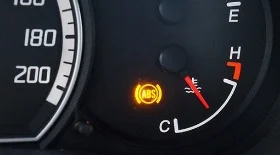
After completing the procedure, switch on the ignition and wait for the pump to build up pressure and the ABS light to go out. Check the system for leaks.
Was this article useful?
Your feedback helps us improve our content.
Related Materials

Discussion (0)
No comments yet!