How to top up coolant: rules and step-by-step instructions
Can you top up antifreeze? Yes, but with caveats regarding the fluid type and the procedure itself. Below we will analyse how to choose a suitable coolant, whether you can use water, and how to perform the top-up correctly (we will look at the process using the popular Hyundai Accent as an example, but the algorithm applies to other cars too).
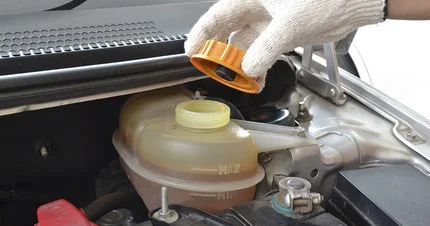
Functions of antifreeze
The primary and main task of antifreeze is cooling the car's power unit. In addition, coolant reduces the load on engine parts and prevents corrosion thanks to a package of additives.
Due to constant circulation and temperature fluctuations, antifreeze gradually loses its properties: additives degrade, and the water in the composition evaporates. The liquid darkens and becomes less effective at removing heat.
Choosing antifreeze for replacement
Ideally, you should use the coolant recommended by your vehicle manufacturer (check the owner's manual). When topping up, it is best to use the same brand and class that is currently in the system.
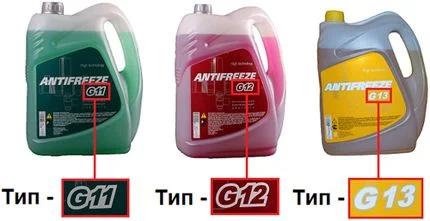
Coolant classes
For example, the Hyundai Accent uses the following types:
- G-11. Traditional silicate or hybrid compositions;
- G-12 and G-12+. Carboxylate compositions (OAT);
- G-12++ and G-13. Lobrid antifreeze (Lobrid).
Mixing coolants of different classes (e.g., G11 and G12) is not recommended, as additives may react and form sediment. The exception is universal G12+, which is often compatible with other classes (read the instructions on the packaging). Do not mix antifreeze with incompatible generic products.
Antifreeze is sold in two forms: ready-to-use and concentrate. Do not pour in neat concentrate — it freezes at -13°C and transfers heat poorly. It must be diluted with distilled water according to the instructions.
Can you top up antifreeze with water?
You can add water to the coolant, but with important limitations.
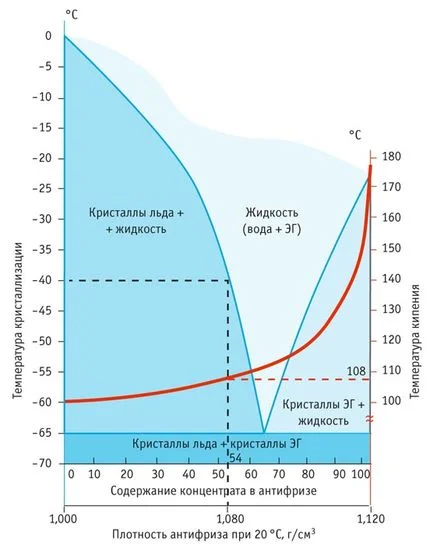
Antifreeze crystallisation temperature
Firstly, the water must be distilled. Ordinary tap water contains salts that cause limescale and corrosion.
Secondly, water is added in small quantities (100–200 ml) and only if the level drop is caused by evaporation (in summer, through the reservoir valve). Antifreeze consists of water and alcohol (ethylene glycol); water evaporates first, so topping it up restores the correct proportion.
When to top up coolant
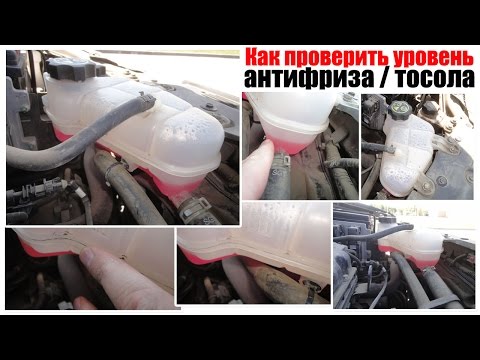
Checking the coolant level
Main reasons for topping up:
- Level below the MIN/L mark. Check the level on a cold engine. The expansion tank of the Hyundai Accent (and most cars) has L (Low) and F (Full) marks.If the level drops regularly, look for the leak source.
- Expiry of service life. G-11 is changed every 2–3 years, G12 every 5 years. If the fluid has turned dark, rusty, or thickened before this time — replace it immediately.
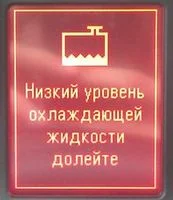
Low coolant level indicator
A lack of antifreeze leads to engine overheating, oil degradation, and potential failure of internal engine components.
How to top up antifreeze correctly
Let's look at the procedure using the Hyundai Accent as an example. The algorithm is universal, only the location of the reservoir differs.
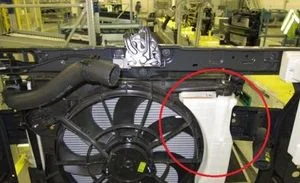
Location of the coolant expansion tank on a Hyundai Accent
- If possible, park the car facing slightly uphill. This helps air escape from the system faster.
- Cover the expansion tank cap with a thick cloth and slowly unscrew it, releasing residual pressure.
- Pour the liquid in a thin stream. This prevents airlocks from forming. Try not to shake the liquid to avoid creating bubbles.
- Top up to a level just below the maximum mark (F or MAX). Tighten the cap.
- Start the engine and warm it up to operating temperature. Switch off, let it cool down, and check the level again. If it has dropped (the fluid has circulated through the system), repeat the top-up.
We recommend carrying leftover antifreeze with you in case an emergency top-up is needed.
Flushing the system
Flushing is necessary if:
- The antifreeze has darkened significantly, and dirt or flakes are visible.
- You are switching to a different type/class of antifreeze.
- You do not know what was previously used.
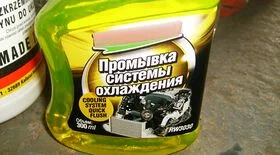
To flush, the old fluid is drained, and distilled water or special flushing compounds are circulated through the system.
Summary
Topping up is a simple procedure if you observe safety rules (cold engine only!) and do not mix incompatible compositions. Regularly check the level under the bonnet to prevent overheating.
Was this article useful?
Your feedback helps us improve our content.

Discussion (0)
No comments yet!